
SOAX Changes Its Web, Products, Pricing
The reboot touches upon most aspects of the service, aiming to give developers full control.
- Published:

SOAX, the UK-based provider of proxy servers and web scraping tools, has made sweeping changes across its service. They include an updated web design, additions and removals from the product line-up, new features, revised pricing structure, and more.
The provider calls this a reboot. The overarching idea is to give customers more control over the infrastructure. We’ll cover the highlights.
Product Updates: Out with Server Proxies, Web Scraping API, in with a Headful Browser Service
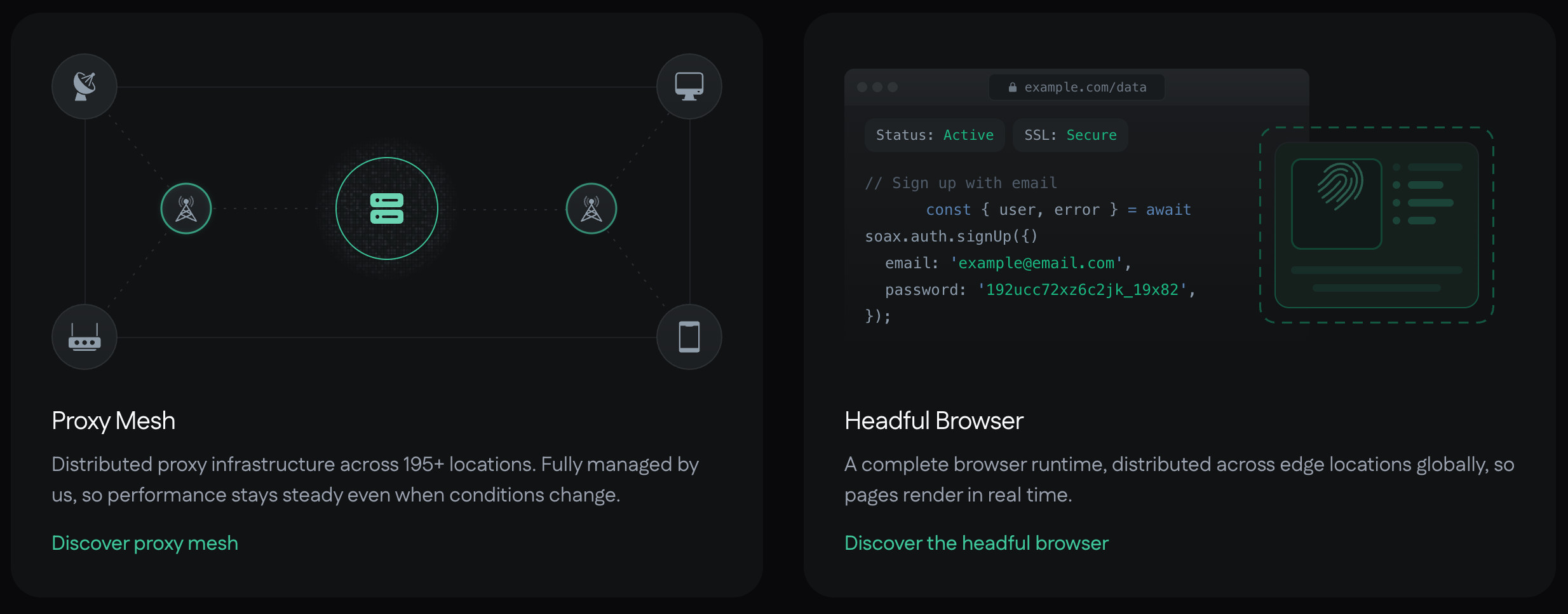
One of the most significant changes involves a revised product line-up. SOAX dropped ISP proxies back in 2025. Now, its datacenter proxy pool is following suit. As a result, the provider will no longer be selling server-hosted proxies – it will focus on peer-to-peer residential and mobile proxy networks.
SOAX’s web scraping API is also no longer available on the website. It’s been replaced by a headful browser service that reportedly runs on real user devices. This product is seemingly still in development.
For its residential and mobile proxies, the provider has chosen a unique approach which segments the traffic cost by location. There are three tiers: the first includes ~30 high-value countries like the US, Japan, and most of Europe; the second features ~60 countries throughout the Americas, Asia, and Africa, including India and Brazil; the third covers smaller or less demanded locations like Kenya or Lebanon.
The plans also introduce various small upsells. Committing more gets you extra packages (we’ll cover them shortly) and team seats, a premium SLA, dedicated IP pools, and better support.
Features: Way More Control over Access and Proxy Infrastructure
Perhaps most importantly, SOAX has decided to give developers as much control as possible. This includes both access to the platform and the proxy infrastructure, as well as better visibility into usage.
When it comes to platform features, SOAX’s new dashboard brings workspaces. They enable permissioned access to the dashboard. In addition, it’s now possible to create sub-user-like packages with their own limits and credentials.
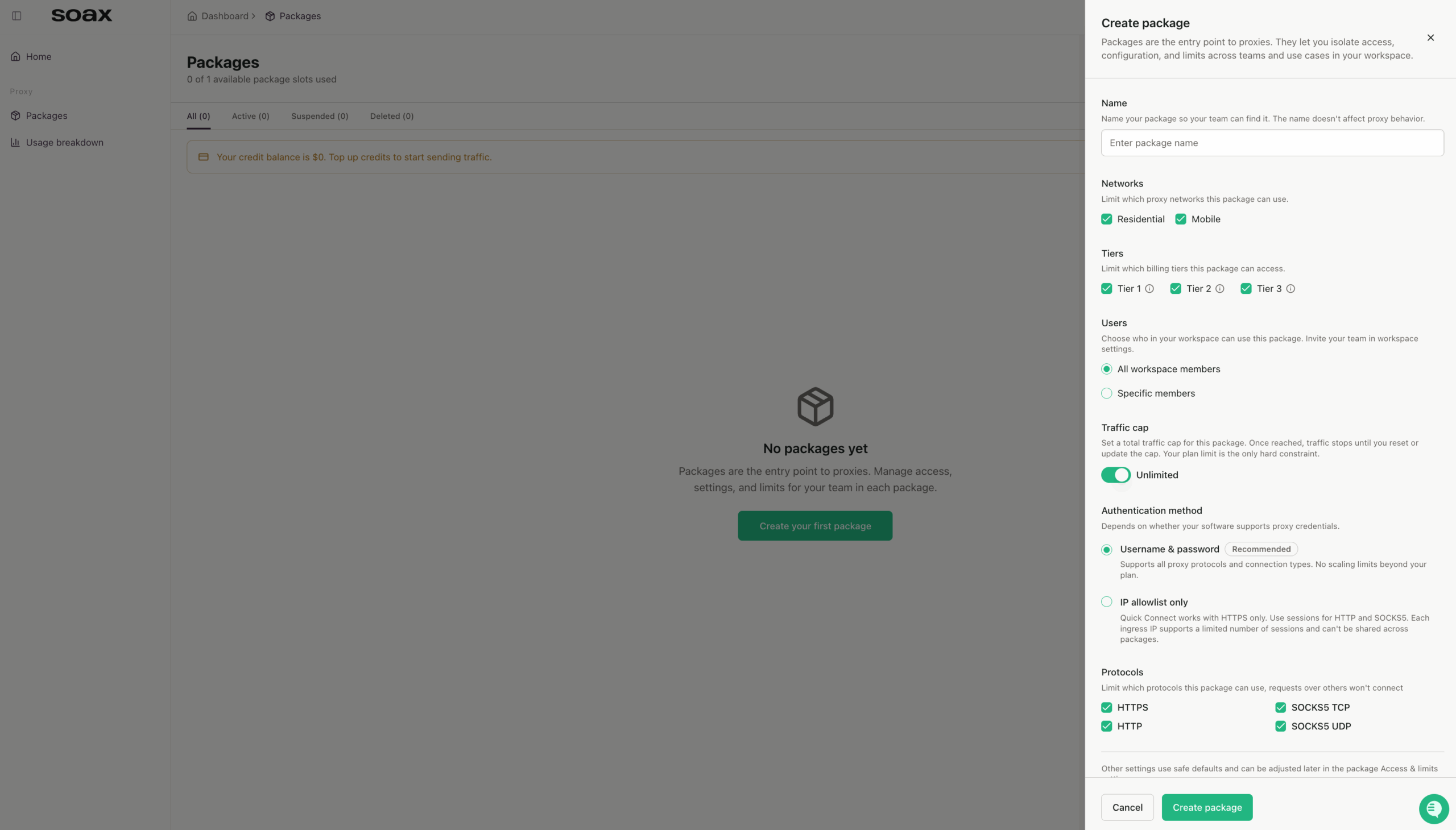
Access to the proxy infrastructure has also become significantly more granular. Among the new features, it’s become possible to:
- Use residential, mobile, or both proxy networks at once
- Specify rotation rules based on time, number of requests, or errors
- Rotate only to IPs with similar characteristics
- Restrict which protocols the proxies can access
- Choose where DNS is resolved
- Set up target allowlists and blocklists
- Select accepted target types (hostnames, IPv4, IPv6 IPs)
- Control access to network ports
- and more.
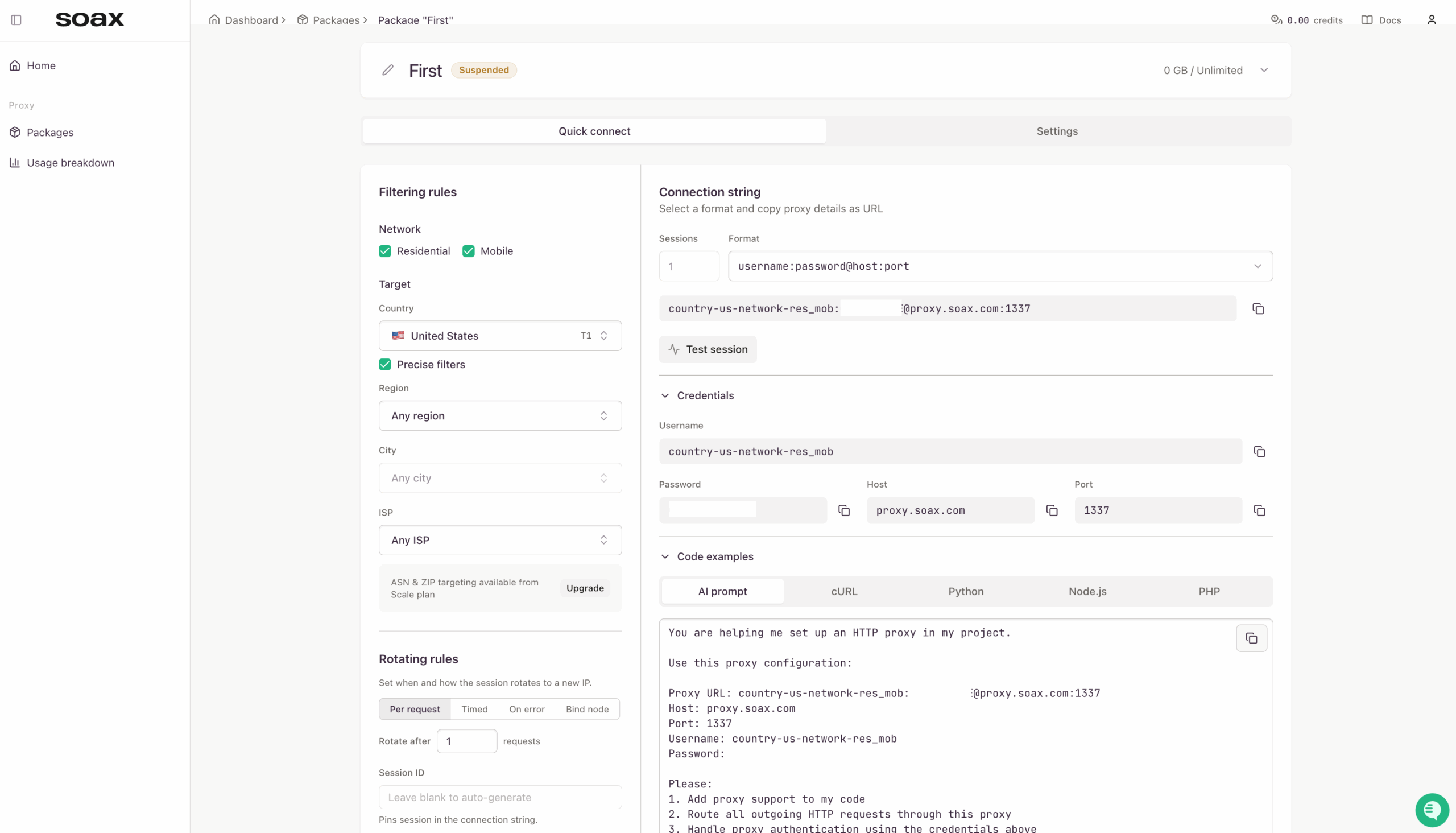
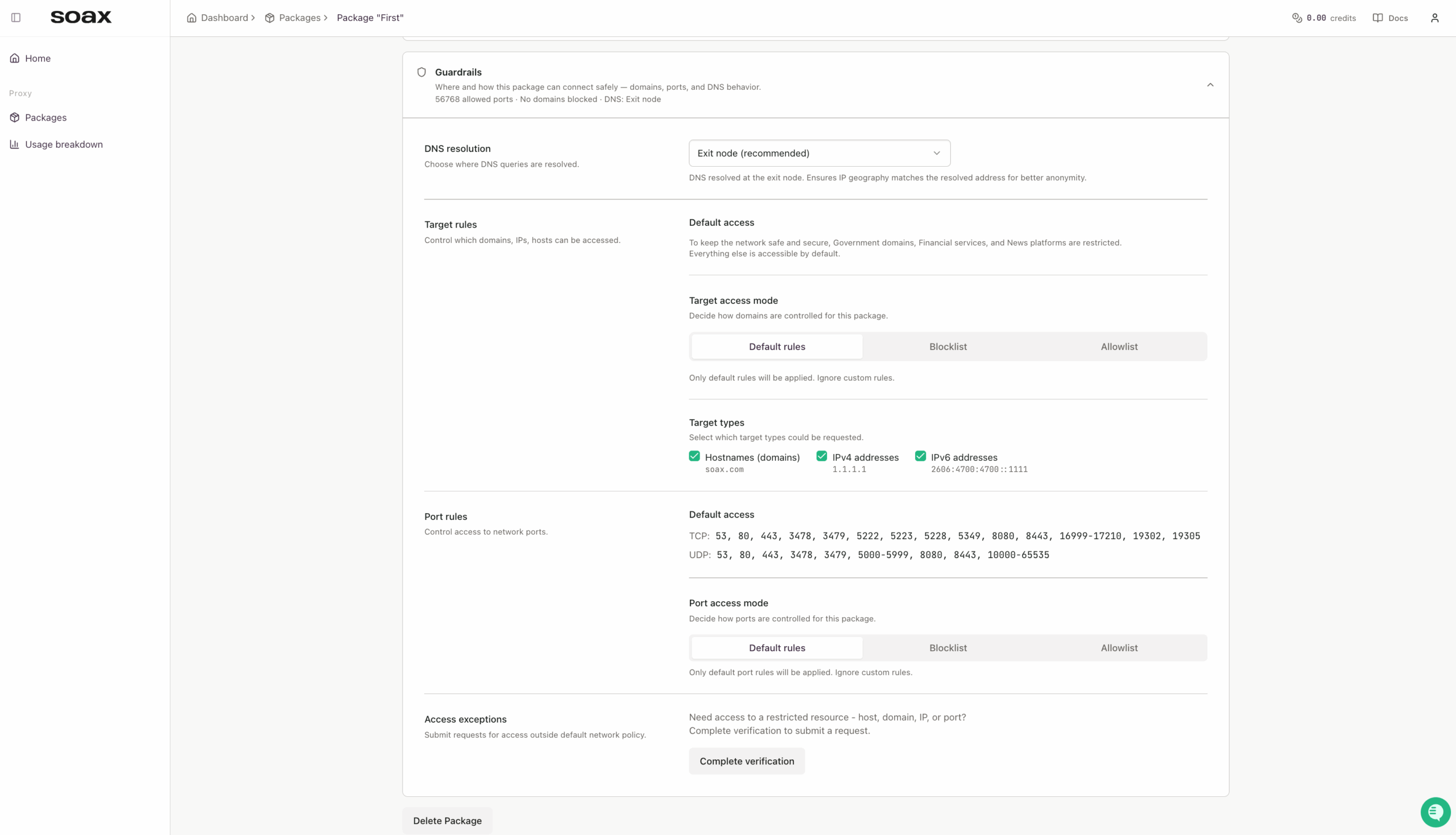
Some of these parameters are impossible to control with other providers – and many of them require human interaction to enable.
The observability tools have received attention as well. It’s become possible to track credit and traffic use by package, proxy network, country tier, and individual locations. SOAX provides two types of graphs and a table-formatted usage log below.
Bottom Line
With this reboot, SOAX has once again positioned itself as a tech innovator. The provider had seemingly found itself in a lull for the past few years.
It’s a shame that some products had to go, but this lets SOAX focus on the services it cares about the most. Maybe that’s for the better, and we’ll see them introduced again in the near future as the platform matures. For now, we’re excited to see how the headful browsers work in practice – we feel like it’s a promising (though definitely tricky) approach to solving the problem of web access.
