
Testing Major ISP Proxy Services: 2026 Edition
Our annual proxy market report covered everything but ISP proxies (also called static residential proxies). That’s because they’re a fascinating product, and we felt they needed a closer look than the format would’ve allowed. Well, here we are. Let’s get into it.
Key Findings
- Dedicated ISP proxy networks have become large: out of the 11 providers we tested, one offered IPs in 44 countries, while another had over 68,000 proxies in stock. The location coverage strongly favors North America and Western Europe.
- We dissected the characteristics of ISP proxies and categorized them into four tiers. The US had the largest number of Tier 1 IPs that came directly from major consumer ASNs like AT&T and Comcast (and, of course, RCN). The situation in Hong Kong and Singapore was much worse in comparison.
- ISP proxy servers can reach a response time of 50ms or less in favorable scenarios. In the US, sending requests from California added an overhead of 300ms over Ashburn. Compared to residential proxies, these servers can scrape up to 14 times faster once the page size grows.
- Some of the feature highlights include backconnect gateways that take care of IP rotation, sub-user management, and city or ASN-level IP selection. While long standard for other proxy types, they make a difference with ISP proxies.
- A dedicated IP usually costs between $4 and $2 per unit, depending on scale. Their rates drop less compared to other proxy types due to sourcing challenges, and customers who buy just one proxy seriously overpay for the privilege.
ISP Proxies in 2026
We last did a report dedicated to ISP proxies back in 2023 – quite a while ago! Already an established tool in niche communities – mainly resellers of limited edition items, – they were starting to find a place in the general market.
- Three years later, ISP proxies have entrenched themselves alongside other proxy types, and increasingly in place of datacenter proxies. They’ve seriously grown both in scope and scale, with providers offering over 40 locations to choose from, and even letting customers specify states or cities when buying IPs.
Therefore, however amusing the image below may be, we believe it fails to paint the full picture:

- Furthermore, providers like Webshare have expanded the distribution methods of ISP proxies: they repackaged a coveted, expensive, and hard-hitting product into something you can buy in bulk for cents apiece. Still, dedicated IPs remain the gold standard. On the other hand, rotating ISP proxy pools, which were popular among major providers three years ago, haven’t panned out at all.
- The sourcing methods have also shifted. In our previous report, nearly one in two ISP proxies from major ASNs were linked to AT&T. The telco has since stopped renting out new IP space, forcing providers to adapt. After the FBI disrupted NetNut’s DiviNetworks in July 2026, the market lost its only alternative procurement method, where ISPs allowed proxy providers to use their network capacity alongside real customers.
- As such, sourcing quality IPs remains a challenge. In particular, providers find it hard to reconcile quality ASNs and the organizations which own the IPs – this matters for databases like IP2Location. Customers don’t make things easy either by relying on tools like Scamalytics or the excellent Chinese Ping0 IP checker.
- While some major providers have expanded their ISP proxy service, others have decided to scale it down: SOAX removed it altogether, and Bright Data did away with state and city targeting, likely finding them not worth the effort. Overall, ISP proxy servers have become more prevalent and available and, barring severe measures from ISPs, we expect this trend to continue.
Testing Parameters
This section describes which providers we chose, what products we tested, and where we benchmarked them from.
Participants
The report includes 11 proxy providers ranging from boutique to enterprise services.
1. BartProxies – specialized provider for buying limited edition items.
2. Byteful – former specialized provider with a boutique ISP proxy service.
3. Decodo – top five mid-market provider with multiple ISP proxy formats.
4. Evomi – emerging provider with a boutique ISP proxy service.
5. Infatica – mid-sized provider which targets companies.
6. IPRoyal – entry to mid-market provider with a large coverage.
7. NodeMaven – specialized provider for multiple account managers.
8. Oxylabs – top five provider, enterprise oriented.
9. Proxy-Seller – IPRoyal-like service with plans for individual to enterprise use.
10. Rayobyte – mid-sized provider from the US.
11. Webshare – one of the largest providers of server-based proxies.
Testing Setup
We’re interested in dedicated ISP proxies as the most popular format for this proxy type. We asked the participants for IPs in three continents, depending on their availability. Note that what you see in this report may not always match the self-service experience.
We set up servers near the IP location to optimize request paths. In the US, we actually used two in both ends of the country to reduce the bias toward Ashburn.
Our main target for infrastructure benchmarks was a global content delivery network (CDN) which automatically chose a server closest to the requesting IP address. So, for example, if it identified the request as coming from a Texan IP, it routed to a server in Dallas.
To assess infrastructure performance, we used our own modified script. Otherwise, we used a third-party scraper for Amazon and a Camoufox-based scraper for Google.
| Tested package | Our server |
| 100 US IPs | Ashburn, VA and San Jose, CA |
| 100 UK IPs | Germany |
| 100 Hong Kong or Singapore IPs | Singapore |
General Scale of ISP Proxy Providers
Let’s see how large and diverse ISP proxy networks can get.
| Company | Countries* | Available stock** |
| IPRoyal | 44 in 5 continents | ~28,000 |
| Oxylabs | 28 in 5 continents | ~42,000 |
| Proxy-Seller | 24 in 4 continents | Not specified |
| Infatica | 23 in 4 continents | Not specified |
| Decodo | 21 in 5 continents | ~68,000 |
| Byteful | 18 in 3 continents | ~8,300 |
| Webshare | 17 in 5 continents | ~11,600 |
| NodeMaven | 8 in 4 continents | ~13,900 |
| Rayobyte | 6 in 2 continents | ~1,300 |
| BartProxies | 4 in 2 continents | Not specified |
| Evomi | US | ~2,000 |
* September 2026 data
** Dedicated IPs, when checked on September 2
ISP proxy networks have grown to impressive proportions. For comparison, in 2023 Decodo covered only four locations, and Webshare just two. The natural impetus is to expand horizontally; but some providers like BartProxies chose to scale existing distributions channels, advertising their ability to supply as many as 100,000 IPs in focus locations.
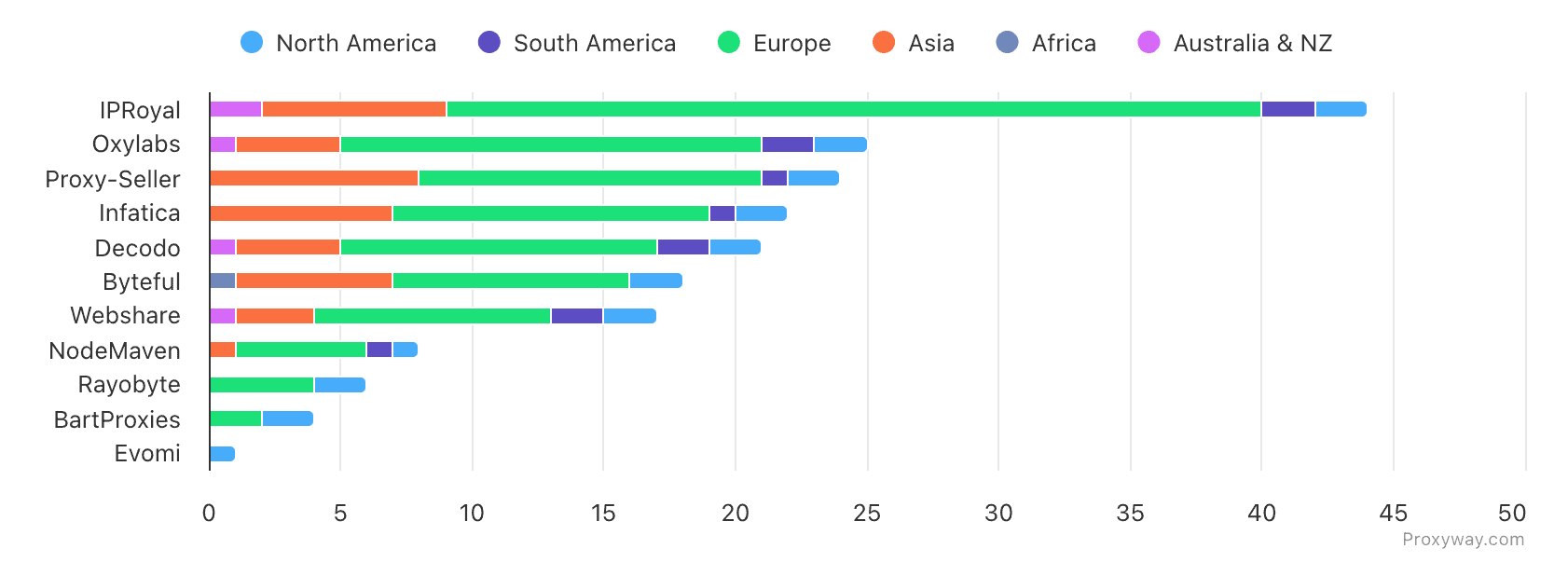
Location coverage with ISP proxies is extremely biased toward so-called Tier 1 countries with strong economies. The order of priority starts with the US, then Western Europe, then select Asian locales and Brazil. China is mostly represented by Hong Kong, which is too small for the map below.

Note the word advertised. In reality, the availability of IPs varied significantly even among supported locales. For example, Decodo, a provider with the largest stock of IPs in self-service, had only around 1,300 in Brazil (which is still very respectable). IPRoyal, which covered the most countries, offered 100 or fewer IPs in 43% of them. And Byteful, the only provider with ISP proxies in Africa, actually had zero in stock when we checked.
Analyzing the IPs We Received
It’s time to take a look at our ISP proxies. You’d think that creating one would be as easy as bringing an IP to an internet service provider. You’d be suprised.
What Makes for Great ISP Proxies?
In general, these are the main criteria ordered by difficulty. Do you need to meet all of them? Not really, and few providers bother due to diminishing returns or excessive costs.
👶 Baseline
- Proper geolocation – it’s surprisingly hard to keep IP location data consistent across major databases like MaxMind, IP2Location, and IPinfo.
- Non-hosting and non-datacenter ASN – this is what distinguishes ISP proxies from datacenter IPs.
🏋️♂️ Expected characteristics
- Major consumer ASN – customers generally prefer their IPs to come from known networks that serve end users. An example would be Comcast or BT.
- IPs recognized as residential in databases – usually, this refers to the ISP or MOB usage type data point. It completely depends on the organization that owns the IP address which providers then announce on residential networks. IPs rented from IPXO, for example, won’t be treated as residential, no matter which network they end up on.
- Large IP diversity – proxy networks should ideally cover as many ASNs and subnets as possible. This ensures a more diverse IP profile that’s harder to block. One exception is buying complete subnets where you get full control over their use.
🦄 Hard mode
- Matching ASN & IP owner’s (ISP’s) geolocation – we’ve seen US IPs where the contact details refer to a Ukrainian or even Palestinian company. Not many websites may track this, but it’s a tell-tale sign of a proxy. Chinese providers actually charge more for ISP proxies they call native.
- Matching ASN & IP owner – the ideal scenario is not where you bring IPs to a provider’s network but rather where a provider lets you use its own stock. This way, all the identifiers remain consistent.
🎲 Questionable characteristics
- Fraud scores in IP databases – dedicated ISP proxies are expensive, so its become popular to check them with IP databases. Whilst we also include results from such checkers, we don’t consider fraud scores a reliable data point: first, because you never know if your target actually cares about them; and second, because few checkers share their methodology. We honestly have little idea how Scamalytics arrives to its score. Do you?
ISP Proxy Quality Tiers
Knowing what we know, we can try to categorize ISP proxies into several quality tiers – because why not? We suggest a classification in the table below.
It’s very important to understand that a lower tier IP won’t necessarily perform worse. Factors like IP usage history and scraper setup may play as big a role. So while it’s good to strive for the best quality possible, an otherwise flawed proxy may be enough if it’s linked to a major non-datacenter internet service provider.
| Description | Example | |
| Tier 1 | Properly geolocated IPs sourced directly from major consumer ISPs (the perfect proxies). | 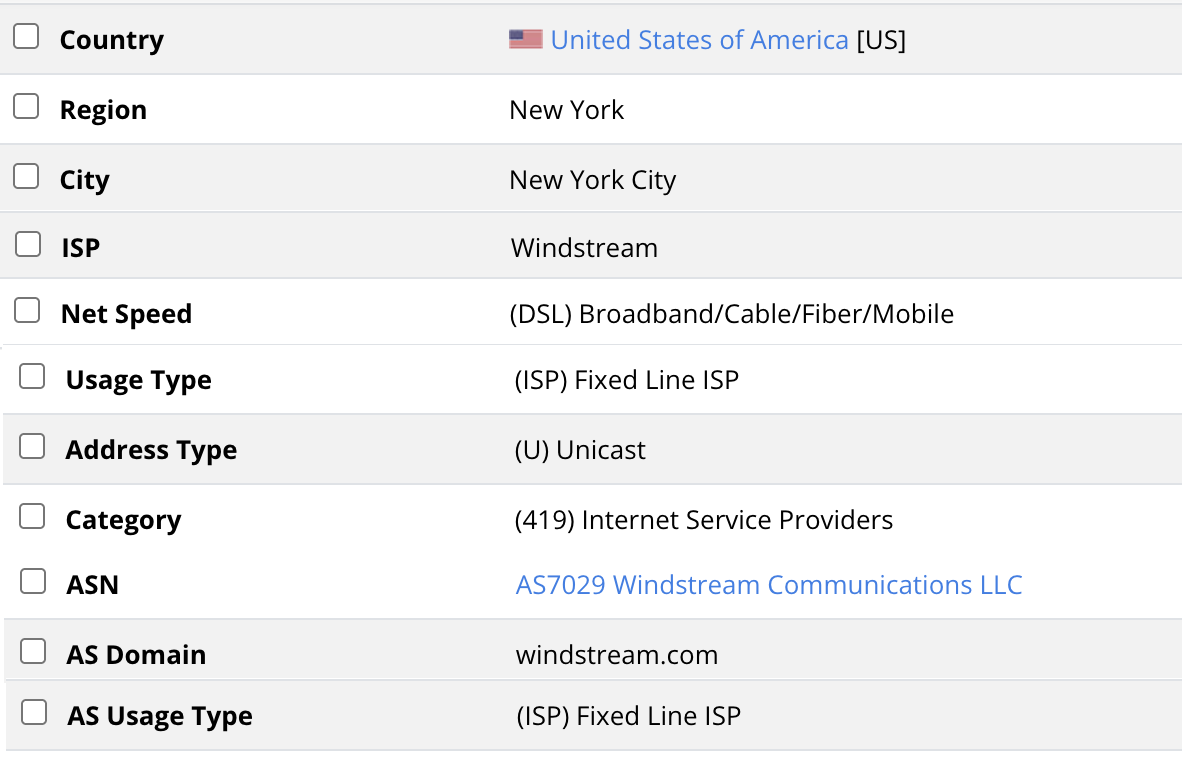 |
| Tier 2 | 1) Properly geolocated IPs that are linked to major consumer ASNs, recognized as residential in databases, and have matching ISP and ASN locations. 2) Properly geolocated IPs sourced directly from minor consumer ISPs. | 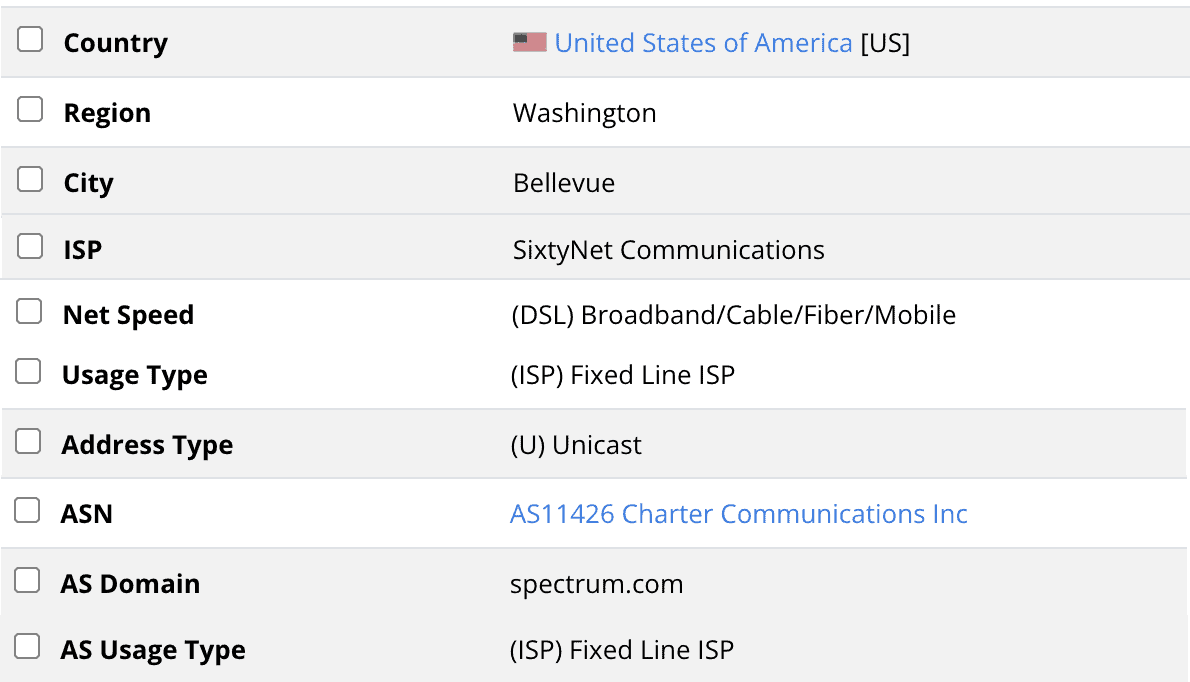 |
| Tier 3 | 1) Properly geolocated IPs from major non-datacenter or hosting ASNs. 2) Properly geolocated IPs from minor consumer ASNs that are recognized as residential and have matching ASN and ISP locations. |  |
| Tier 4 | Everything else. | 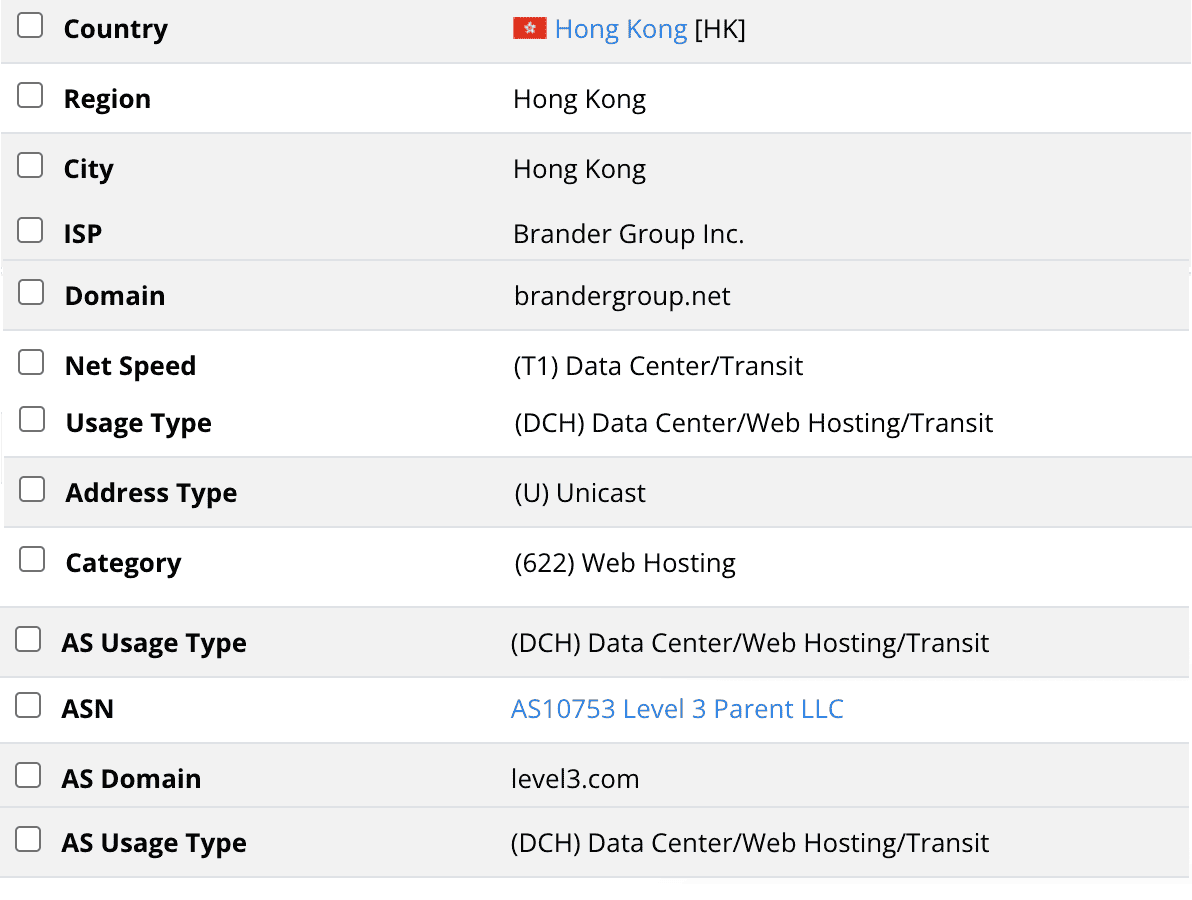 |
🇺🇸 Analyzing the US IPs
| Avg. IP diversity | Tier 1 IPs | Tier 2 IPs | Tier 3 IPs | Tier 4 IPs |
| ~29 subnets, ~4 ASNs | 32.87% | 17.82% | 47.47% | 1.75% |
Providers evidently have developed distribution channels in the US. The proxies we received had both high IP diversity and quality.
IP diversity
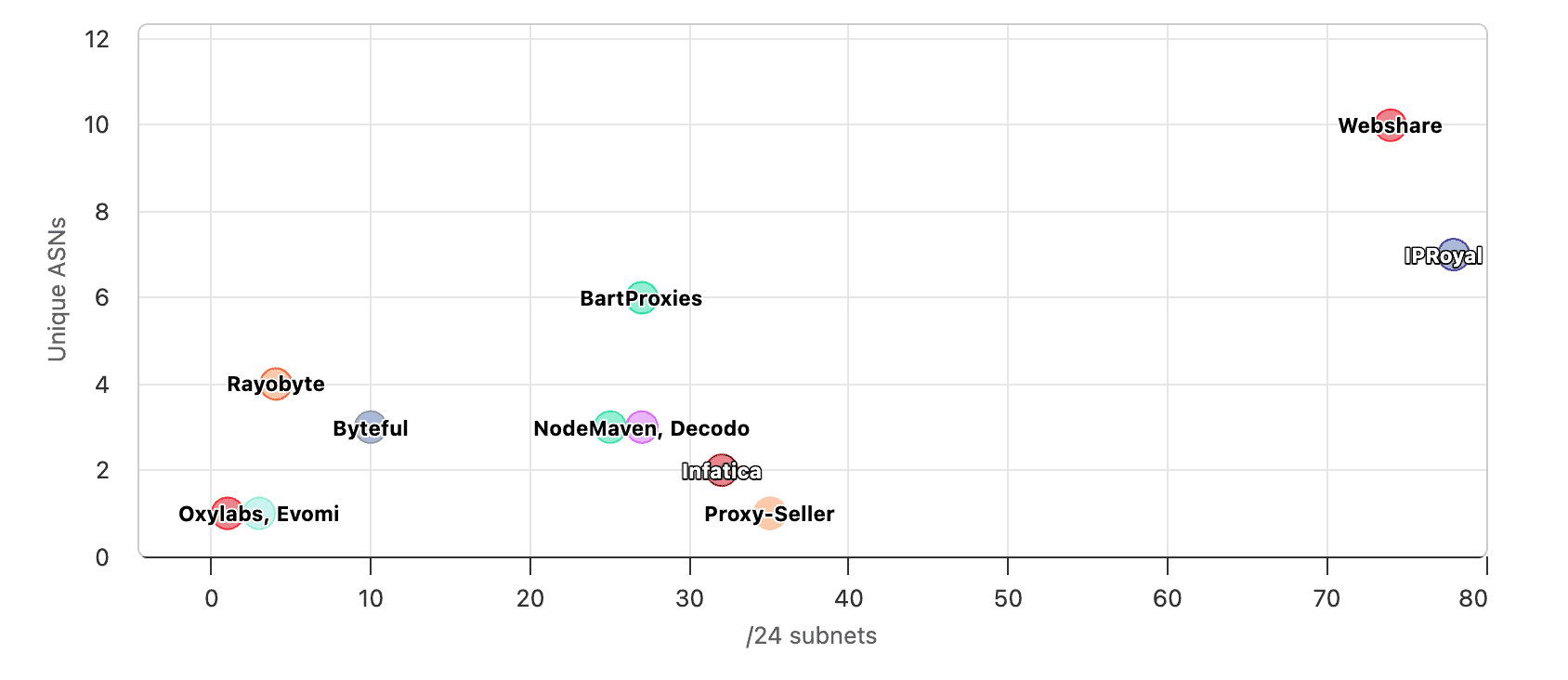
Webshare and IPRoyal stood out with the largest number of ASNs and IP blocks in them. Oxylabs chose a different route, giving us only one subnet; meanwhile, Evomi likely had no choice to begin with.
IPs by tier
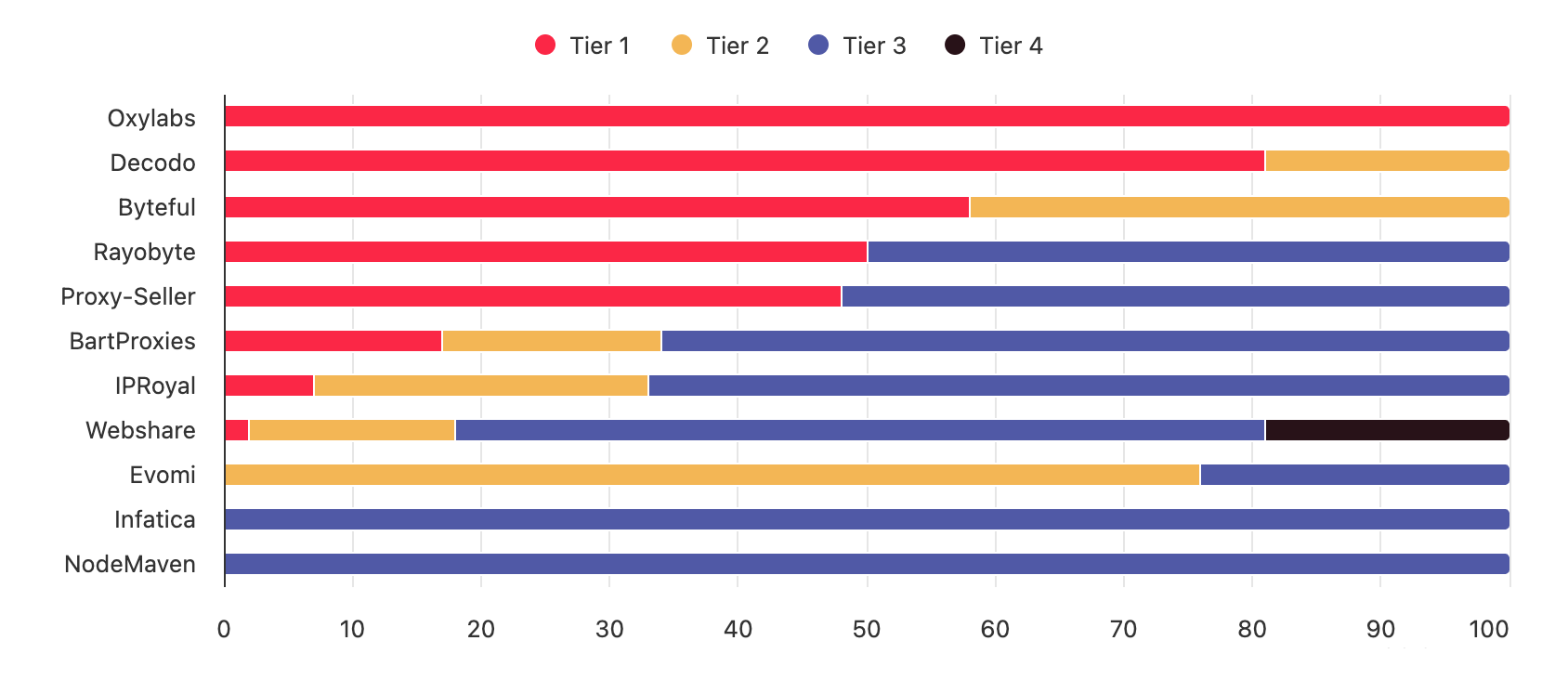
Oxylabs’ trade-off is apparent when looking at IP quality. Still, it wasn’t the only provider with a large share of IPs taken directly from major consumer ISPs. Even those with predominantly Tier 3 proxies had big names on board – however, they took less care in matching the other parameters.
Top ASNs

Four out of five IPs were linked to major US consumer ISPs, around a quarter to RCN. Even AT&T had a sizable presence, but it likely relates to older contracts that haven’t expired yet.
| wdt_ID | wdt_created_by | wdt_created_at | wdt_last_edited_by | wdt_last_edited_at | Provider | Geo match* | /24 subnets | /16 subnets | Unique ASNs | Major resi ASNs** | Non-resi ASNs | Residential IP %*** | Matching ASN & ISP | Matching ASN & ISP location |
|---|---|---|---|---|---|---|---|---|---|---|---|---|---|---|
| 1 | BartProxies | ✅ | 27 | 8 | 6 | 6 | 0 | |||||||
| 2 | Byteful | ✅ | 10 | 4 | 3 | 3 | 0 | 83 | 58 | 100 | ||||
| 3 | Decodo | ✅ | 27 | 4 | 3 | 3 | 0 | 100 | 81 | 100 | ||||
| 4 | Evomi | ✅ | 3 | 3 | 1 | 1 | 0 | 76 | 0 | 100 | ||||
| 5 | Infatica | ✅ | 32 | 4 | 2 | 2 | 0 | 59 | 0 | 41 | ||||
| 6 | IPRoyal | ✅ | 78 | 26 | 7 | 3 | 2 | 99 | 41 | 66 | ||||
| 7 | NodeMaven | ✅ | 25 | 8 | 3 | 2 | 1 | 84 | 0 | 2 | ||||
| 8 | Oxylabs | ✅ | 1 | 1 | 1 | 1 | 0 | 100 | 100 | 100 | ||||
| 9 | Proxy-Seller | ✅ | 35 | 3 | 2 | 1 | 0 | 100 | 48 | 100 | ||||
| 10 | Rayobyte | ✅ | 4 | 4 | 4 | 4 | 0 | 100 | 50 | 50 | ||||
| 11 | Webshare | 99%/98%/88% | 74 | 24 | 10 | 7 | 2 | 22 | 0 | 93 | ||||
| Avg = 28.73 | Avg = 8.09 | Avg = 3.82 | Avg = 82.30 | Avg = 63.00 | Avg = 75.20 |
* According to MaxMind, IP2Location & IPinfo
** Top 15 US ISPs based on this article
*** IP2Location, usage type data point, ISP/MOB IPs
| Provider | Scamalytics median | Scamalytics avg. | Ping0 avg. |
| Byteful | 0 | 0 | 24.55 |
| Decodo | 0 | 3 | 14.32 |
| Evomi | 0 | 1 | 23.12 |
| Infatica | 19 | 27 | 28.80 |
| IPRoyal | 29 | 31 | 17.64 |
| NodeMaven | 11 | 36 | 30.59 |
| Oxylabs | 0 | 0 | 16.53 |
| Proxy-seller | 29 | 22 | 12.33 |
| Rayobyte | 10 | 15 | 18.97 |
| Webshare | 19 | 17 | 17.79 |
🇬🇧 Analyzing the UK IPs
| Avg. IP diversity | Tier 1 IPs | Tier 2 IPs | Tier 3 IPs | Tier 4 IPs |
| 8 subnets, ~1.4 ASNs | 10.33% | 15.78% | 35.67% | 38.22% |
The situation in the UK was worse compared to the US, showing that it’s harder to bring large ISPs on board. Still, we still consider it decent.
IP diversity
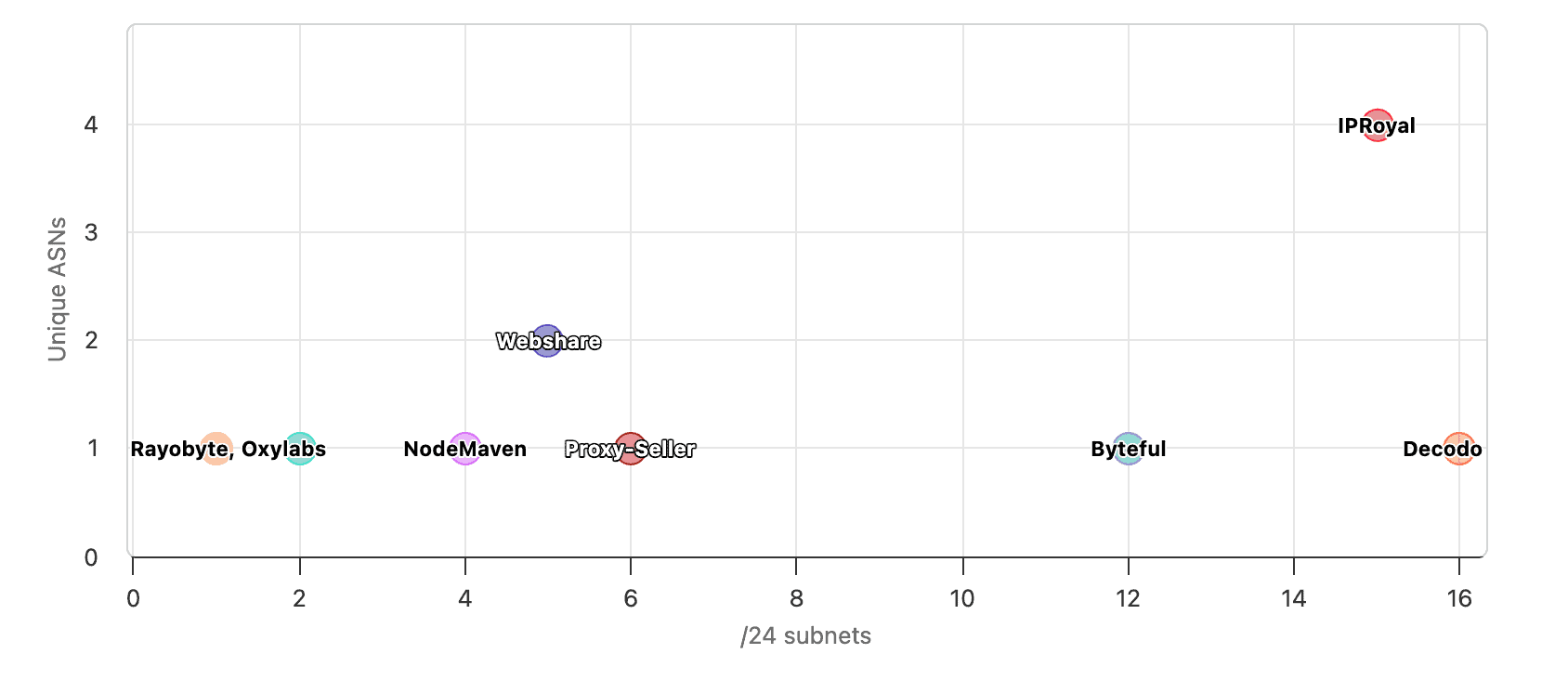
In terms of IP diversity, IPRoyal once again proved that it had the most developed network. Webshare aside, all other proxies came from just one ASN per provider.
IPs by tier

Byteful is UK based, so maybe that’s why it alone managed to source directly from a major ISP serving students and households. Proxy-Seller’s IPs all came from NTT America which, to the best of our knowledge, doesn’t provide consumer internet connectivity in the UK.
Top ASNs

This time, two out of five proxies were linked to a major British consumer internet service provider. While the name Orange sounds familiar, it doesn’t quite make the cut in the UK.
| wdt_ID | wdt_created_by | wdt_created_at | wdt_last_edited_by | wdt_last_edited_at | Provider | Geo match* | /24 subnets | /16 subnets | Unique ASNs | Major resi ASNs | Non-resi ASNs | Residential IP %*** | Matching ASN & ISP | Matching ASN & ISP location |
|---|---|---|---|---|---|---|---|---|---|---|---|---|---|---|
| 2 | Byteful | ✅ | 12 | 5 | 1 | 100 | 93 | 100 | ||||||
| 3 | Decodo | ✅ | 16 | 1 | 1 | 1 | 0 | 0 | 100 | |||||
| 5 | Infatica | ✅ | 12 | 1 | 1 | 1 | 0 | 0 | 0 | |||||
| 6 | IPRoyal | ✅ | 15 | 7 | 4 | 1 | 3 | 99 | 0 | 35 | ||||
| 7 | NodeMaven | ✅ | 4 | 1 | 1 | 1 | 0 | 0 | 0 | |||||
| 8 | Oxylabs | ✅ | 2 | 2 | 1 | 1 | 100 | 100 | 100 | |||||
| 9 | Proxy-Seller | 39%/39%/100% | 6 | 2 | 1 | 100 | 0 | 39 | ||||||
| 10 | Rayobyte | ✅ | 1 | 1 | 1 | 100 | 100 | 100 | ||||||
| 11 | Webshare | 63%/63%/100% | 5 | 2 | 2 | 1 | 0 | 0 | 21 | |||||
| Avg = 8.11 | Avg = 2.44 | Avg = 1.44 | Avg = 99.80 | Avg = 97.67 | Avg = 70.71 |
* According to MaxMind, IP2Location & IPinfo
** Top 10 UK ISPs based on this article
*** IP2Location, usage type data point, ISP/MOB IPs
| Provider | Scamalytics median | Scamalytics avg. | Ping0 avg. |
| Byteful | 7 | 7 | 16.45 |
| Decodo | 0 | 0 | 15.65 |
| Infatica | 0 | 0 | 31.56 |
| IPRoyal | 0 | 0 | 18.41 |
| NodeMaven | 8 | 8 | 25.96 |
| Oxylabs | 0 | 0 | 10.74 |
| Proxy-seller | 0 | 0 | 17.48 |
| Rayobyte | 0 | 0 | 10.85 |
| Webshare | 5 | 4 | 30.82 |
🇭🇰🇸🇬 Analyzing the Hong Kong/Singapore IPs
| Avg. IP diversity | Tier 1 IPs | Tier 2 IPs | Tier 3 IPs | Tier 4 IPs |
| 5 subnets, 1.5 ASNs | 0% | 8% | 17% | 75% |
Compared to either the US or UK, the situation in Southeast Asia was abysmal. It probably didn’t help that we asked for proxies in two small and relatively strict locations.
IP diversity
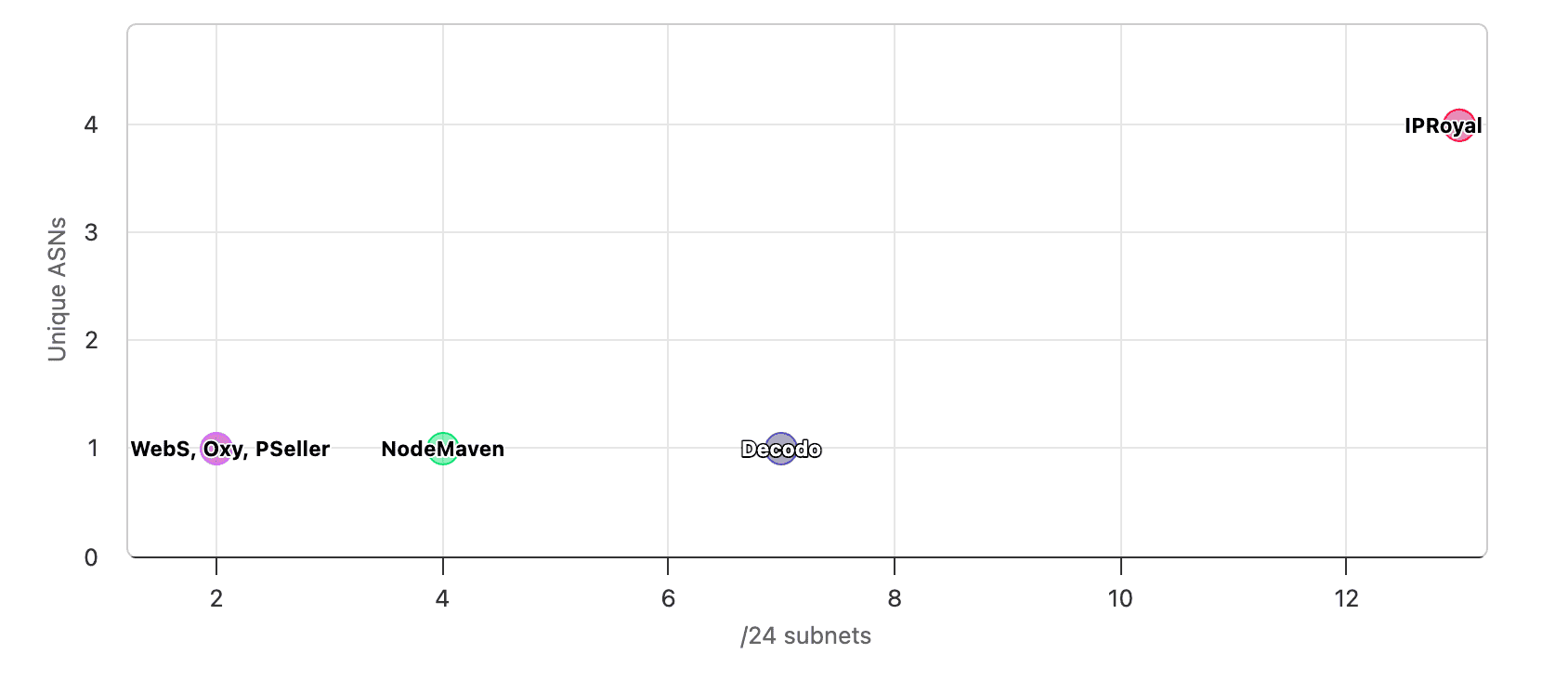
IPRoyal continued showing what diversity means in the context of proxies. The others managed to supply no more than one ASN each; the subnet variety was lower than in the UK, as well.
IPs by tier

We treated IPRoyal’s proxies more leniently because, while one of the ASNs didn’t quite serve residential users, it also wasn’t a straight out hosting provider. In addition, IPRoyal somehow managed to convince Singapore Telecom, which is mighty impressive.
Commendably, NodeMaven’s proxies were also linked to a major Hong Kong ISP. And Decodo was the only provider to properly match the IP owner’s and ASN’s location, which is impressive in its own right. Let’s not talk about the rest.
Top ASNs

Roughly one in four IPs was related to a major residential internet service provider. The pie chart includes some bizarre ASNs, such as TGNET (a Dutch company) or Lumen – we’d have been delighted to see the latter in US proxies but not here.
| wdt_ID | wdt_created_by | wdt_created_at | wdt_last_edited_by | wdt_last_edited_at | Provider | Geo match* | /24 subnets | /16 subnets | Unique ASNs | Non-resi ASNs | Residential IP %** | Matching ASN & ISP | Matching ASN & ISP location |
|---|---|---|---|---|---|---|---|---|---|---|---|---|---|
| 3 | Decodo | ✅ | 7 | 1 | 1 | 1 | 100 | 0 | 100 | ||||
| 6 | IPRoyal | ✅ | 13 | 7 | 4 | 3 | 100 | 2 | 32 | ||||
| 7 | NodeMaven | ✅ | 4 | 2 | 1 | 100 | 0 | 0 | |||||
| 8 | Oxylabs | ✅ | 2 | 2 | 1 | 0 | 0 | 0 | |||||
| 9 | Proxy-Seller | ✅ | 2 | 2 | 1 | 1 | 100 | 0 | 0 | ||||
| 11 | Webshare | ✅ | 2 | 2 | 1 | 0 | 0 | 0 | |||||
| Avg = 5.00 | Avg = 2.67 | Avg = 1.50 | Avg = 100.00 | Avg = 2.00 | Avg = 66.00 |
* According to MaxMind, IP2Location & IPinfo
** IP2Location, usage type data point, ISP/MOB IPs
| Provider | Scamalytics median | Scamalytics avg. | Ping0 avg. |
| Decodo | 0 | 0 | 18.59 |
| IPRoyal | 0 | 0.04 | 21.49 |
| NodeMaven | 0 | 0 | 20.44 |
| Oxylabs | 0 | 0 | 21.93 |
| Proxy-seller | 50 | 33.5 | 32.42 |
| Webshare | 0 | 0 | 35.38 |
Performance Benchmarks
We also checked how the dedicated ISP proxies performed. We’ll first examine each location separately, then compare the data with residential proxies.
Results by Locale
Infrastructure success rate
70k requests (10k/day) from Ashburn + 70k (10k/day) from San Jose, CA

The servers rarely failed on their own. Byteful dropped some requests, but only when accessed from our California server. We may have caught it during a bad stretch.
Response time
Requests made from Ashburn, Virginia. 6 KB page – 70k requests, 2 MB page – 5k requests
At 40ms, Oxylabs responded extremely fast. We believe it’s a new record. NodeMaven was similarly nippy, while Evomi had the best consistency.
California vs Virginia latency
Avg. response time, 6 KB page size

Most US ISP proxies are hosted in the East Coast, so it’s natural that making requests from as far as California would add some latency. What we didn’t expect was the overhead would reach as much as 300ms. In the case of NodeMaven, it made requests complete seven times slower!
Download speed
Hetzner’s 100 MB test, 10 random IPs checked. Baseline – 191.16 MB/s

If you thought your country had big income inequality, take a look at these download speeds. Evomi was over 20 times faster than IPRoyal! Rayobyte’s median was so low compared to the average number because it got a few overperformers.
Real-world benchmarks
~2,600 connection requests made from Ashburn
<- avg. success rate, -> avg. response time


Few providers had issues with Amazon, and some managed to reach an impressive success rate with Google. The latter target has become very challenging to scrape at scale.
Unfortunately, due to user error (our subscription ran out), we weren’t able to test NodeMaven and Infatica with the search engine.
Infrastructure success rate
70k requests (10k/day)

Once again, Byteful stubbed its toe during a brief period of instability. The rest performed as expected.
Response time
6 KB page – 70k requests, 2 MB page – 5k requests
The response time was a bit higher than in the US (maybe because our requests had to travel from Germany), but Oxylabs still managed to reach 90ms with a small page.
Download speed
Hetzner’s 100 MB test, 10 random IPs checked. Baseline – 103.57 MB/s

Webshare is what you should use for media downloads. Infatica – less so, though it can be perfectly viable for scraping webpages.
Infrastructure success rate
70k requests (10k/day)

There were no outliers here – all providers performed excellently.
Response time
6 KB page – 70k requests, 2 MB page – 5k requests
Oxylabs and IPRoyal were more than thrice faster than the next participant, and about six times faster than the slowest proxies we tested. This advantage shrunk when opening a bigger page.
Download speed
Hetzner’s 100 MB test, 10 random IPs checked. Baseline – 191.50 MB/s

As in the other locales, there are clear overperformers. IPRoyal, on the other hand, never seems to fully open its pipes; to be fair, we didn’t notice a big impact in real-world tests.
Comparison with Residential Proxies
Can ISP proxies beat peer-to-peer residential IPs in speed? Absolutely. But by how much?
According to our data, a typical ISP proxy downloads a 6 KB page nearly eight times faster; with a 2 MB page, the gap grows to over 14 times.
Response time comparison of residential and ISP proxies
11 to 13 providers per proxy type, at least 5,000 requests made from Ashburn

Feature Highlights
The market is starting to move beyond simple IP lists, which is refreshing. Here are some features that have stood out for us.
More Flexible IP Distribution & Targeting Options
Thanks to their scale and growing supply chains, ISP proxy providers now offer significantly better distribution options than the old “buy a package, get IPs in one country” approach.
Location granularity has been another major downside compared to residential proxy networks – this too can be partially overcome. Decodo has done a particularly good job here, letting its customers specify either a city or an ASN at no extra cost.
- Evomi, Infatica, NodeMaven, Rayobyte – one country per plan
- BartProxies – one country AND ASN per plan
- Byteful, Proxy-Seller, Webshare – one OR more countries per plan
- Oxylabs – one OR more countries AND optionally ASNs per plan
- IPRoyal – one OR more countries AND optionally cities per plan
- Decodo – one OR more countries AND optionally cities OR ASNs per plan
Backconnect Gateways
Backconnect gateways put another server in-between your computer and the proxy. They’re mostly used with residential and mobile proxy pools, but some providers have brought this feature to ISP proxies, as well.
Backconnect gateways add another step to the connection path, so they can be counterintuitive if you prioritize speed above all. At the same time, they enable basic quality-of-life features like IP rotation.
Implementations can vary. For example, Decodo puts all its ISP proxies behind a gateway by default; to choose a particular IP, you need to awkwardly play around with username parameters. Webshare probably does it best: it assigns a simple proxy list, while also giving an entry point for rotation. Using the latter adds around 10-15% in latency.

Sub-Users
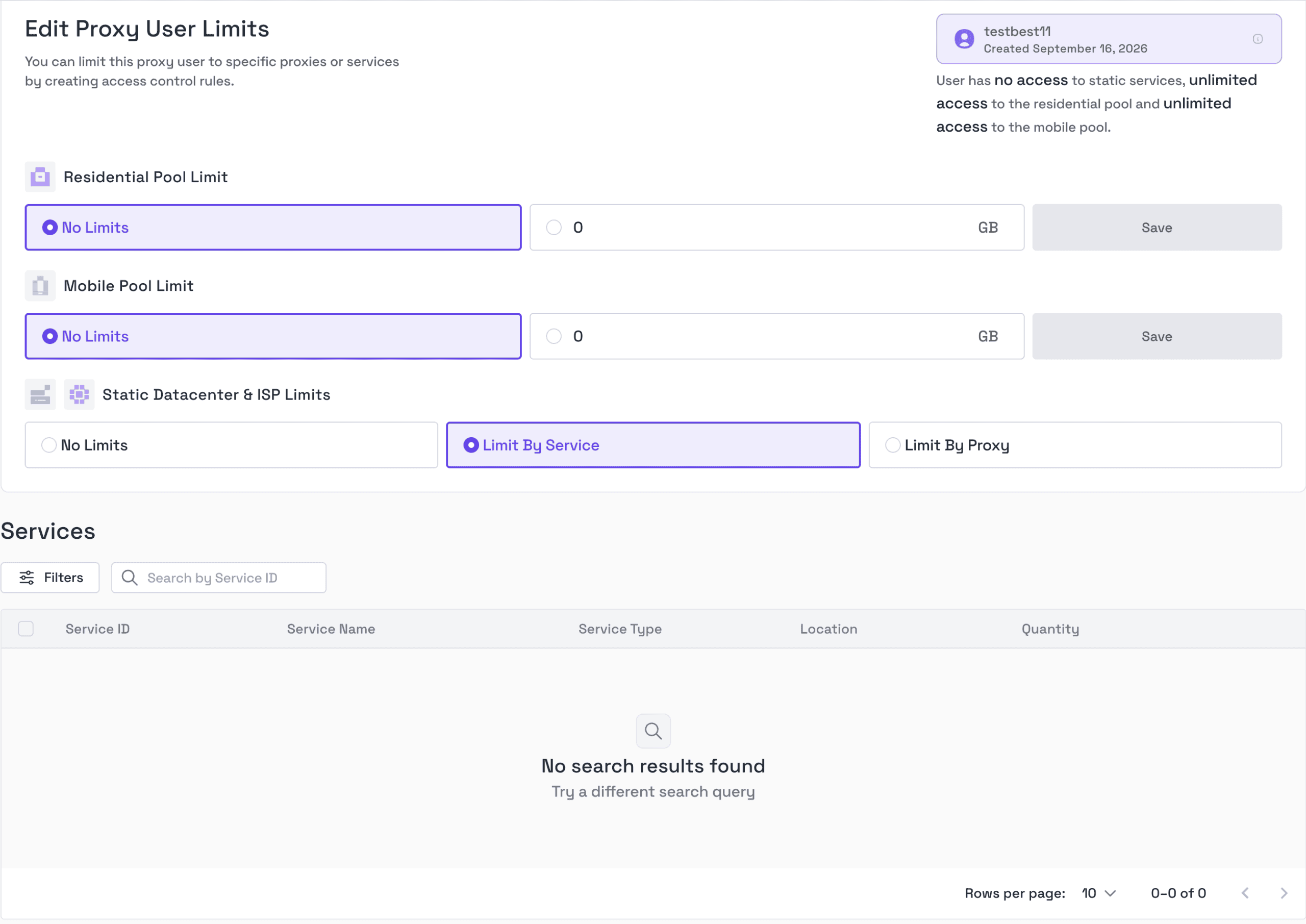
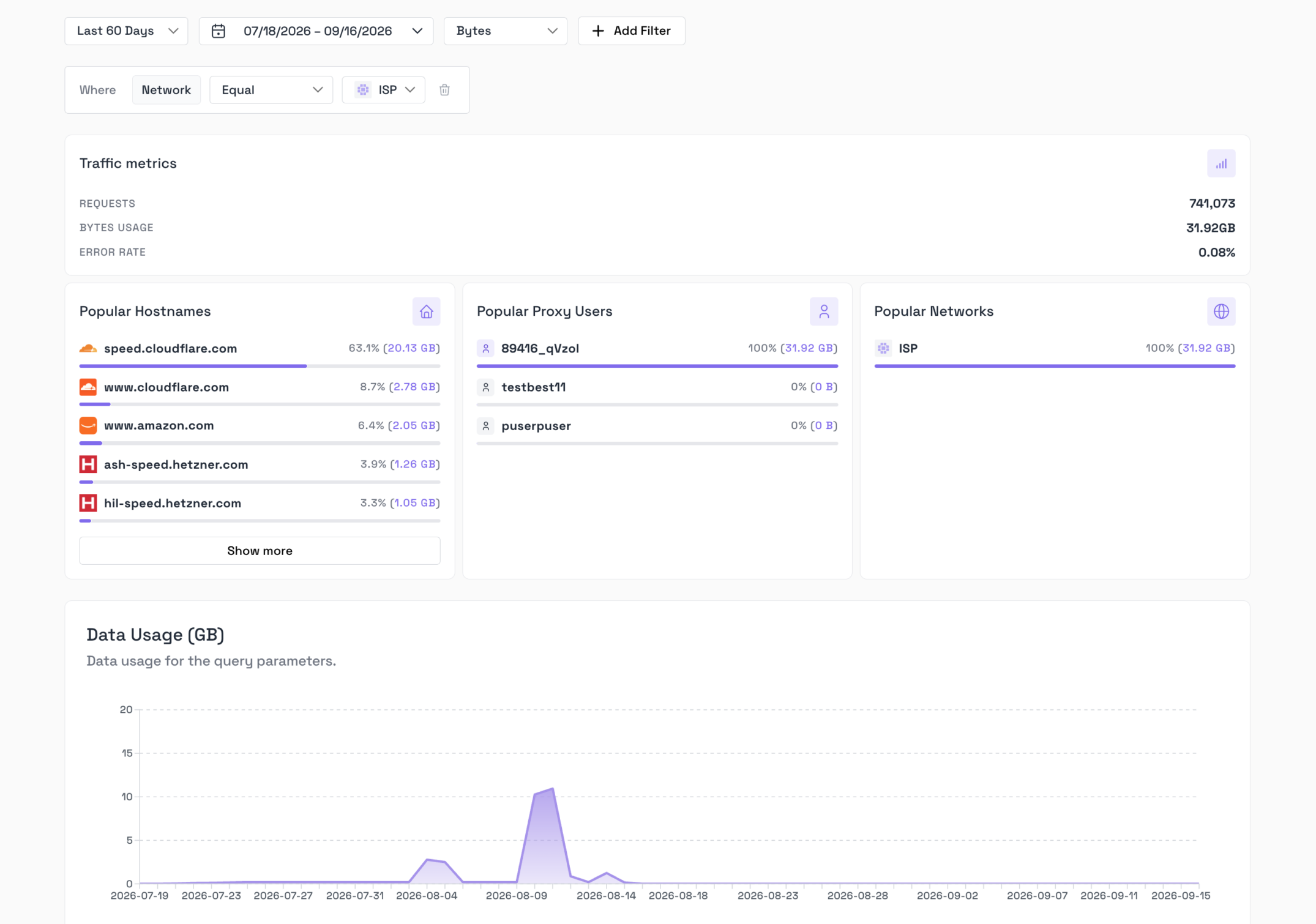
Once again, sub-users are often a feature found in residential or mobile proxy networks. Unmetered traffic and limited observability tools made them unnecessary for server-based proxies. But sub-users can be implemented well, and then they become an amazing asset.
Byteful is by far the best when in this regard. Byteful’s system allows sharing access to select ISP proxy packages or even individual IPs within them – alone or together with residential traffic. You can then monitor your requests across different domains and sub-users in a dedicated observability panel.
UDP Support
SOCKS5 and consequently UDP have become standard protocol options for datacenter and ISP proxies. Here, however, they’re much less constrained compared to residential proxy networks:
- First, because you actually get real bandwidth to use.
- And second, because providers have full control over the infrastructure. So, even draconian stewards like Bright Data allow themselves to open more ports and targets for use.
IPv6?
IPv6 ISP proxies remain effectively impossible to find. Let’s revisit this topic during our next report.
How Much Do Dedicated ISP Proxies Cost?
Dedicated ISP proxies generally cost between $2 and $4 per IP address, not accounting for discounts. Because their sourcing can be expensive, there’s a natural price floor which makes the price range much less flexible compared to, say, residential proxy pools.
We’ve noticed an interesting pattern where providers make their single-IP rates significantly steeper per IP than the next smallest package. This is likely to tax customers with VPN-like use cases where one proxy is enough for the task.
Rates of dedicated ISP proxies
Black line = median of all providers

It’s easy to distinguish the outliers. One the one hand, there’s Rayobyte with broad and unjustifiably expensive plans. On the other hand, Webshare and especially Proxy-Seller stand out as the affordable options.
For full transparency, Webshare sells traffic packages, higher concurrency, and other features as add-ons. We used the default configuration with 100 GB/IP address. Unlimited traffic and extra threads positions the provider near the median.
Conclusion
Thanks for reading our report! If you have any questions or comments, feel free to reach out through info at proxyway dot com or our Discord server.
