
SOAX Review
We first tested SOAX in 2021. Still a rookie provider, it already looked promising: the proxies rarely failed, offered city & ASN targeting out of the box, and had decent management tools. Though painfully slow and still unfinished, the overall service was surprisingly good.
SOAX is all grown up now. It’s become our Contender of the Year several times, most recently in 2025, proving that it can compete with major players like Decodo or Bright Data.
Lately, SOAX has been going through changes. Its 2026 reboot (to quote the provider) introduced some interesting features and put a lot of power into the user’s hands. The aim is “to give you full control over every request”.
We’re going to explore these features and see how SOAX performs compared to the broader market. Let’s go!
Three-Minute Human Summary
- SOAX sells access to residential and peer-to-peer mobile proxy pools. Both come with one subscription, cost the same, and can even be used at the same time. The provider sources IPs in-house but doesn’t really share how.
- The proxy networks were average to above average in size. They include city + ISP filtering, ability to block the domains you don’t need, and a big variety of rotation options: based not only on time, but also every X requests. What’s more, you get to control what happens when an IP goes offline.
- SOAX’s infrastructure had few errors or periods of downtime throughout three weeks, and it connected to websites faster than average, no matter which continent we targeted.
- The pricing is unique, in that SOAX divides countries into three tiers and charges different rates. For example, US proxies are chiefly in Tier 1 and cost around 2.5x more than Tier 3 locations. Overall, the rates are competitive with other mid-market providers, and traffic rolls over for 60 days.
- SOAX’s dashboard looks spartan but gives you a lot of control. You can create packages and decide which proxy networks, protocols, countries, and even ports they can access. There are team seats, and the usage stats show detailed information about spending and traffic use (though not error codes or visited domains). SOAX’s customer support, however, has been nerfed hard after the reboot.
- Overall, SOAX offers performant proxy networks and some great tools to make the most of them. This should appeal to developers in particular, especially if they know what they’re doing and require little outside help.
News about SOAX
-
By Adam Dubois
- Provider News
-
- Provider News
-
- Provider News
General Information
- Country: UK
- Founded: 2020
- Employees (LinkedIn): 50-100
- Proxy networks: Residential, mobile
- Other services: Scraping browser (in beta), managed scraping services
- Supporting tools: Online proxy checker
- Price segment: Mid-market
- Starting price: $25
- Payment methods: Credit card, PayPal, cryptocurrencies
- Trial: $1.99 to access all products
SOAX is a UK-registered company run by an international staff. It mainly sells rotating proxies. The provider also occasionally surfaces a scraping product, but they never seem to leave beta.
SOAX started off as a mid-range provider, positioning itself in-between penny-pinching services with limited features like PacketStream and enterprise-facing behemoths, such as Bright Data or Oxylabs. After a foray into the premium territory, it’s gone back to its original hunting grounds.
SOAX doesn’t disclose any concrete sources for its proxies, which is concerning. But we do know that it offers an SDK for developers to monetize their apps, such as free VPNs. The provider also supplies several bigger white labels with proxy servers.
Otherwise, SOAX conveys the impression of a solid company. It has ethical guidelines, partners up with The World Ethical Data Forum, and is striving for ISO and SOC certifications. (You can read or watch our interview on ethics with Stepan, SOAX’s CEO.) It has reviews reviews on most review platforms like TrustPilot, G2, or Capterra, and employees on LinkedIn.
For a while, it looked like SOAX had gotten into a lull. In mid-2026, however, the provider rebuilt its whole platform around the idea of giving users full control over its proxy networks. This way, SOAX returned to its technologist roots.
SOAX Proxy Networks
SOAX offers two types of proxy servers: peer-to-peer residential and mobile proxies. The provider also used to sell rotating datacenter and ISP proxies; both were discontinued between late 2025 and mid-2026.
The residential and mobile proxies use the same system, are accessible under one subscription at the same rates, and can even be used at the same time, forming a joint pool. Therefore, we’ll cover them together, only branching out the performance benchmarks.
📋 Specifications
- Advertised proxy pool
- Residential: 155 million IPs
- Mobile: 33 million IPs
- Countries: 195+
- Integration method: Gateway address (gateways in East Coast US, NL, SG)
- Filtering: Random, country, state, city, ASN/ISP, ZIP code
- Rotation
- Every request: ✅
- Sticky sessions: Up to 1 week, up to 1M requests, as long as available
- Session behavior: New IP after disconnect or 60 s of inactivity, retry X times, strict sessions, look-a-like rotation
- Protocols: HTTP, HTTPS, SOCKS5 (incl. UDP & QUIC)
- Authentication: Credentials, IP whitelist
- Sub-users: ✅
- Concurrency: Unlimited threads & ports
- Traffic: Plan based
- Other: DNS resolution rules, target allow/denylist, custom error codes
SOAX advertises huge IP numbers – but, as always, this is just marketing, and we have no standardized way to measure it.
In any case, the provider’s proxy networks cover most countries in the world, with precise filtering options that can be combined together. ISP targeting comes included with all plans, while ASN and ZIP code selection are sold as upsells to large customers. SOAX’s gateway servers are conveniently located in three continents to make routing efficient.
Two standout features here are protocol support and rotation options. For one, UDP is enabled by default. For the latter, you can specify not only any rotation duration up to a week, but also rotate IPs every X requests. This feature is nearly impossible to find without using specialized software (a la Bright Data).
SOAX also lets you choose what happens when a proxy goes offline. The default is switching to another device. If you don’t want that, you can choose to fail requests instead, or mimic the previous configuration by enabling look-a-like rotation.
You’re free to choose where to resolve DNS (at the gateway or the proxy peer), as well as block the domains you don’t want to access. This can help you save traffic – or ensure compliance if you’re working at a big corp.
Finally, SOAX returns its own error codes under X-SOAX-Error or X-SOAX-Detail headers. There’s a big list of possible errors in the documentation.
⚙️ Integration Examples
- Basic request: network-res_mob:[email protected]:1337
- Using filters: country-us-region-california-city-san_francisco-isp-at&t_internet-network-res_mob:[email protected]:1337
- Using sessions: network-res_mob-rotate-requests_15-session-ID:[email protected]:1337
- Using IP whitelisting: https://country-us.proxy.soax.com:1337
SOAX gives you one gateway server with a port that pays homage to leet speak. The username only defines which proxy network (residential, mobile, or both) you’ll use. Otherwise, all parameters are appended to the password.
Because the strings can get pretty long, SOAX has made shorthands for all parameters. Instead of country, you can use c, and so on. This helps with brevity and DNS limits.
If you prefer IP whitelisting and need any of the filters, you’ll have to include them as a subdomain. This also carries the limitation of requiring the use of HTTPS – HTTP and even SOCKS5 requests won’t work.
💵 Pricing Plans
- Model: Pay as you go or monthly subscription with 60-day credit rollover
- Format: Traffic
- Upsells: More proxy packages, team members, filtering options, better support
- Top-ups: ✅ (manual)
- Starting price: $25 for 5-12.5 GB ($2-$5/GB)
- Trial: 3 days & 400 MB for $1.99
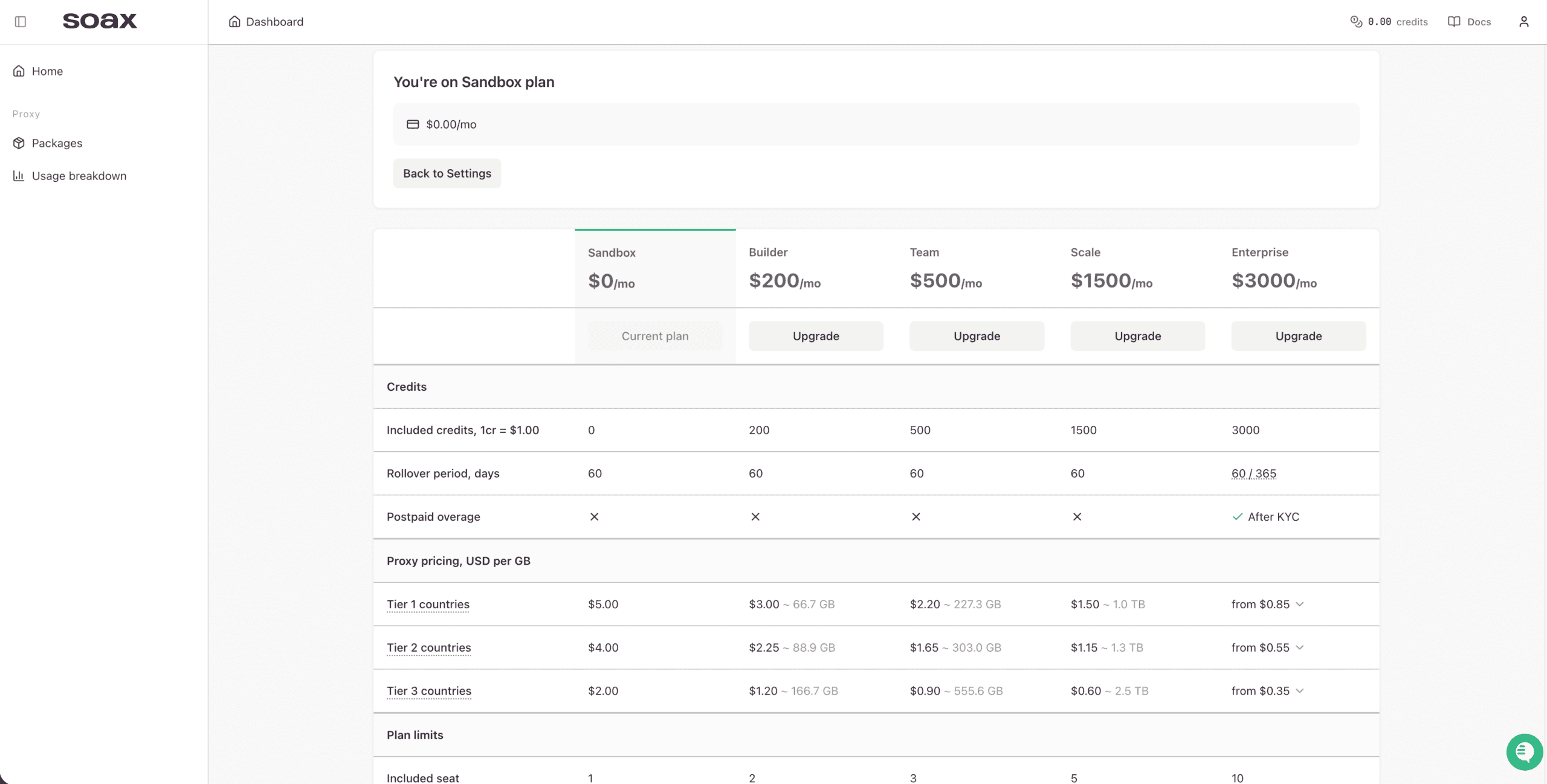
SOAX’s pricing is based on credits. A credit equals $1. You can get various monthly plans which define how many credits you’ll need to buy each month, what rates you’ll pay, and which features you’ll unlock.
There’s also a Sandbox plan – it comes with no credits included and works similarly to paying as you go. Come to think of it, all plans are rather flexible, as they let you freely buy extra credits as needed. In any case, top-ups start from $25. This is the least you’ll have to spend.
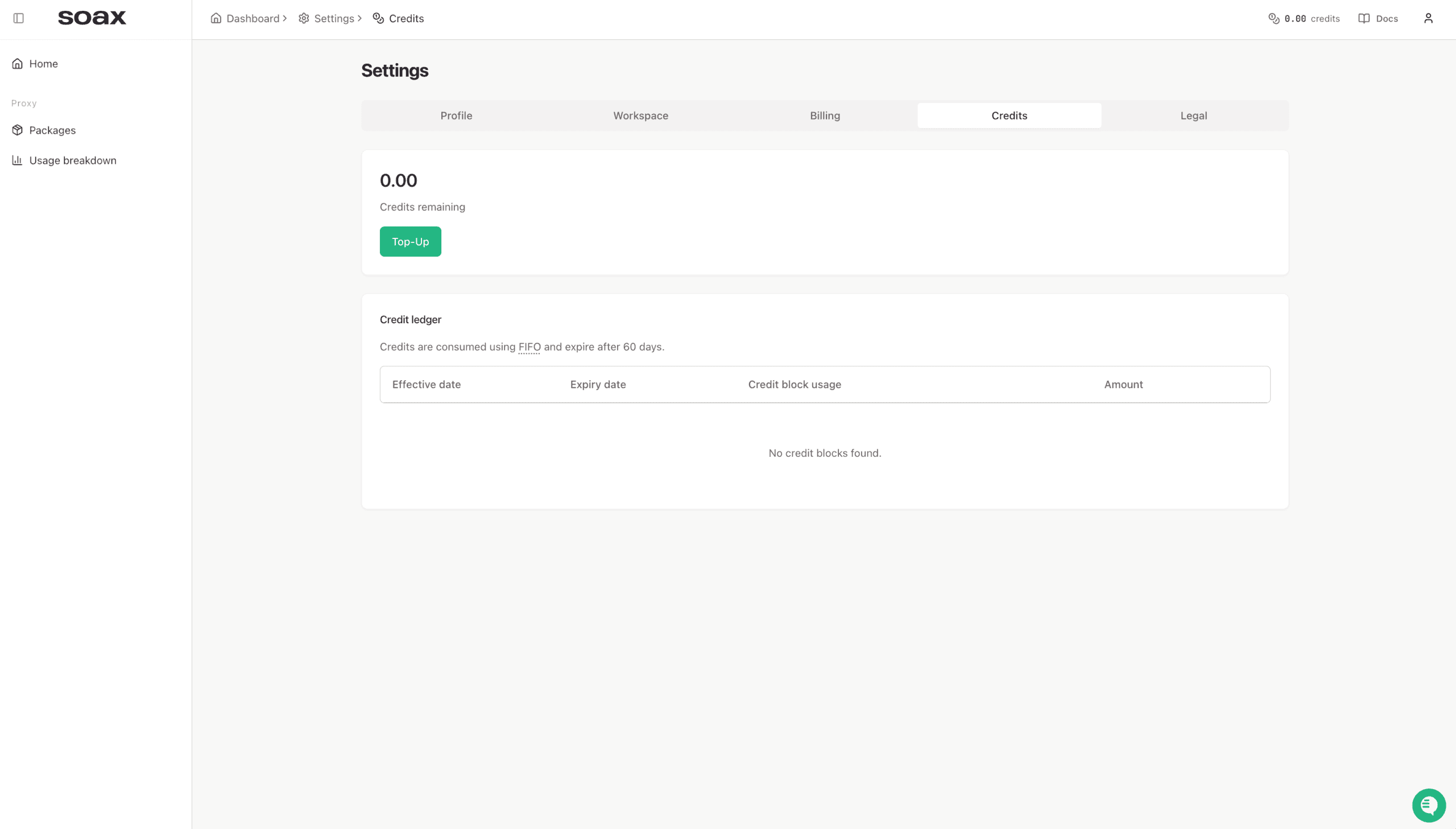
It’s interesting that credits aren’t constrained to the subscription duration – they remain available twice as long. SOAX tracks when you bought each credit and expires them accordingly.
The largest plan on display costs $3,000. Compared to Sandbox, it includes more proxy packages (sort of like sub-users), slots for team access, ASN and ZIP targeting, as well as personalized support. Furthermore, it offers an option to pay yearly, with postpaid billing.
However, SOAX’s most interesting invention is location-based rates. Basically, the provider splits all countries into three tiers and charges a different price for accessing proxies in them.
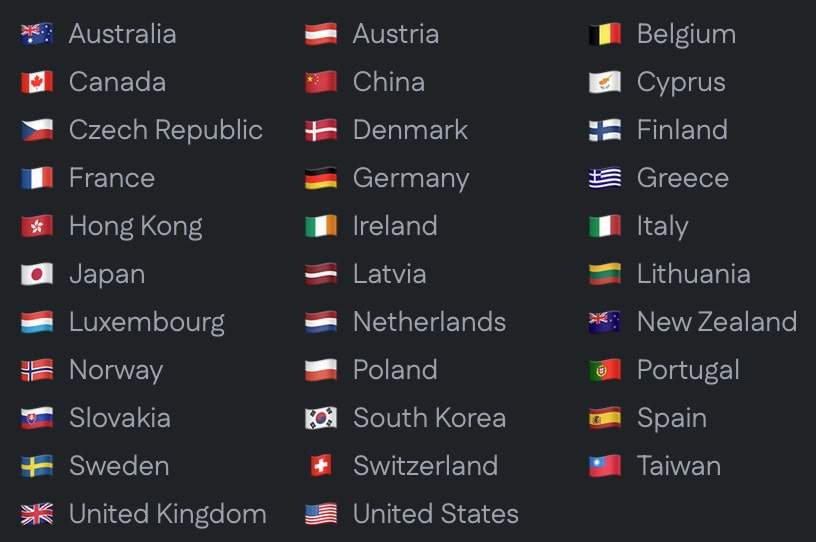
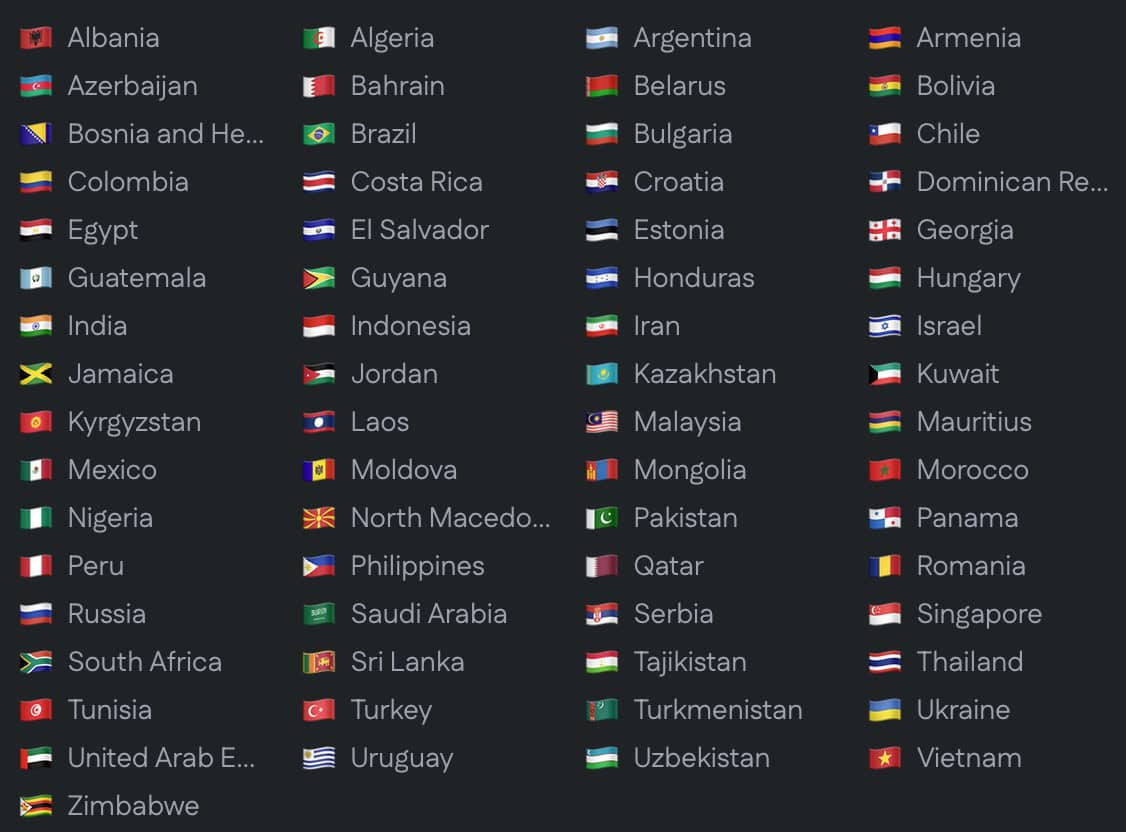
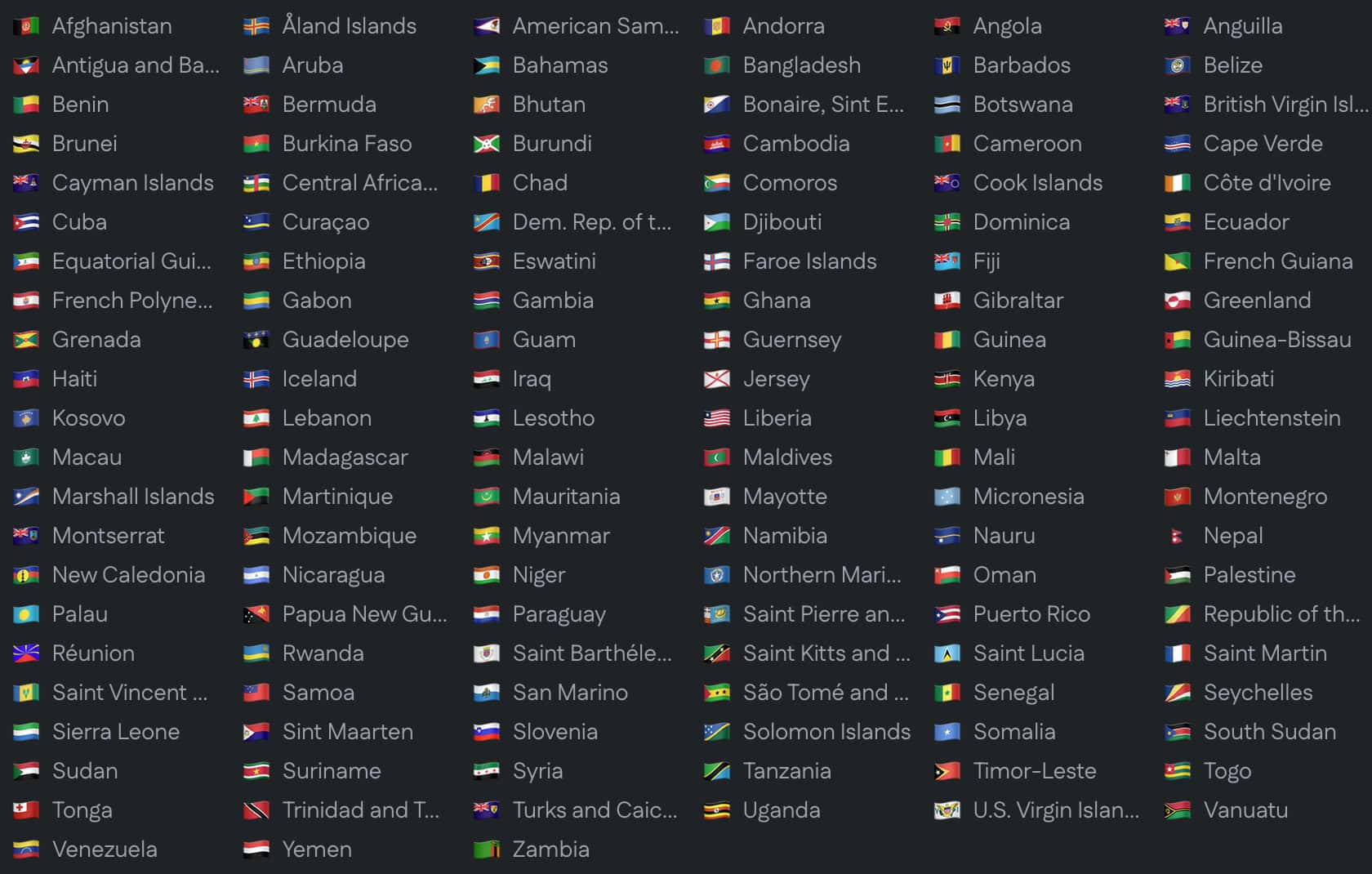
The rates can differ significantly. Tier 2 costs around 80% more compared to Tier 3, while Tier 1 is two and a half times more expensive. Even if you use the proxies without any filters applied, the system dynamically charges you based on the IP location. This makes budgeting complicated.

How expensive is SOAX in the market? Well, its rates actually compare favorably to premium providers like Bright Data, and even mid-market peers like Decodo. We’ve hacked together a standardized comparison with a weighted average of 50% for Tier 1, then 30% and 20% for the next two tiers. Why make things simple, right?
Standardized pricing comparison (residential proxies)
📊 Performance Benchmarks
We last tested SOAX’s residential and mobile proxy networks in April 2026, for our annual proxy market report.
Pool size & composition
| Gateway | Requests | Unique IPs | Residential %* |
| Global | 3.6M over 21 days | 1,670,306 | 97.39% |
| US | 1.2M over 14 days | 641,157 | 99.37% |
| UK | 560k over 14 days | 159,255 | 99.72% |
| EU** | 1.2M over 14 days | 357,265 | 99.17% |
| Brazil | 560k over 14 days | 243,740 | 97.95% |
| India | 560k over 14 days | 236,865 | 94.12% |
| Australia | 140k over 7 days | 14,924 | 98.81% |
* IP2Location database, Usage type data point (ISP, ISP/MOB, MOB IPs)
** Combines Germany, France, Spain, Italy, the Netherlands.
Top 10 countries in the Global pool

Comparison with other providers
SOAX’s residential proxy pool was above average in scale, with an outsized presence in the US. Without any location filters applied, the top three locales were the US (27%), Brazil (17%), and India (5.5%).
Note that by default SOAX only routes to countries closest to your location. For example, our unfiltered pool included exclusively European IPs. To override this, you need to append an undocumented parameter to the connection string.
Infrastructure success rate
Requests: Same as the pool test
Target: Nearest server of a global CDN
| Gateway | Avg. success rate |
| Global | 99.78% |
| US | 99.92% |
| UK | 99.87% |
| EU | 99.87% |
| Brazil | 99.72% |
| India | 99.86% |
| Australia | 99.89% |
Comparison with other providers
The infrastructure almost never failed on its own, and we saw few to no period of downtime during the three weeks of testing.
Infrastructure response time
Requests: 6 KB page size – same as the pool test, 2 MB page size – 5,000
Target: Nearest server of a global CDN
6 KB page size
| Gateway | Avg. | Median | P95 |
| Global (🇩🇪 -> any IP) | 0.89 s | 0.79 s | 1.81 s |
| US (Ashburn -> 🇺🇸 IP) | 0.55 s | 0.44 s | 1.32 s |
| UK (🇩🇪 -> 🇬🇧 IP) | 0.49 s | 0.36 s | 1.19 s |
| EU (🇩🇪 -> 🇩🇪/🇪🇸/🇫🇷/🇮🇹/🇳🇱 IP) | 0.53 s | 0.37 s | 1.37 s |
| Brazil (Ashburn -> 🇧🇷 IP) | 0.97 s | 0.83 s | 1.87 s |
| India (Singapore -> 🇮🇳 IP) | 0.87 s | 0.67 s | 1.91 s |
| Australia (Singapore -> 🇦🇺 IP) | 0.81 s | 0.68 s | 1.56 s |
2 MB page size
| Gateway | Avg. | Median | P95 |
| Global (🇩🇪 -> any IP) | 3.26 s | 1.54 s | 10.05 s |
| US (Ashburn -> 🇺🇸 IP) | 4.37 s | 2.26 s | 14.54 s |
Comparison with other providers
6 KB page size, average response time
SOAX was among the faster providers in our response time benchmark, with an average latency of just above 0.5 seconds in the US. It also managed to control the tail latency well – even the slowest 5% of connections never exceeded two seconds.
Pool size & composition
| Gateway | Requests | Unique IPs | Mobile %* |
| Global | 1.2M over 14 days | 177,428 | 97.64% |
| US | 560k over 14 days | 111,269 | 99.98% |
| UK | 280k over 14 days | 16,031 | 99.49% |
| EU** | 280k over 14 days | 79,855 | 98.69% |
| Brazil | 280k over 14 days | 14,357 | 99.27% |
| India | 280k over 14 days | 134,922 | 99.93% |
| Australia | 140k over 7 days | 3,203 | 99.94% |
* IP2Location database, Usage type data point (ISP/MOB, MOB IPs)
** Combines Germany, France, Spain, Italy, the Netherlands.
SOAX’s mobile proxy pool was among the smaller out of the providers we’ve tested. Still, it included enough IPs for serious use, and they were properly mobile.
Infrastructure success rate
Requests: Same as the pool test
Target: Nearest server of a global CDN (~6 KB page size)
| Gateway | Avg. success rate |
| Global | 99.74% |
| US | 99.85% |
| UK | 99.81% |
| EU | 96.45% |
| Brazil | 98.92% |
| India | 99.17% |
| Australia | 99.86% |
We have few complaints about SOAX’s infrastructure performance. Having said that, the success rate in Europe was a bit shaky compared to the excellent US results.
Infrastructure response time
Requests: Same as the pool test
Target: Nearest server of a global CDN (~6 KB page size)
| Gateway | Avg. | Median | P95 |
| Global (🇩🇪 -> any IP) | 0.92 s | 0.64 s | 2.20 s |
| US (Ashburn -> 🇺🇸 IP) | 0.78 s | 0.66 s | 1.58 s |
| UK (🇩🇪 -> 🇬🇧 IP) | 0.92 s | 0.65 s | 2.09 s |
| EU (🇩🇪 -> 🇩🇪/🇪🇸/🇫🇷/🇮🇹/🇳🇱 IP) | 1.12 s | 0.69 s | 3.18 s |
| Brazil (Ashburn -> 🇧🇷 IP) | 0.95 s | 0.79 s | 1.87 s |
| India (Singapore -> 🇮🇳 IP) | 1.31 s | 0.96 s | 2.88 s |
| Australia (Singapore -> 🇦🇺 IP) | 1.30 s | 1.02 s | 2.58 s |
SOAX’s latency was below average – which is to say, good. The mobile proxies had higher tolerances than the residential proxy network, sometimes reaching three seconds to respond when the connection was bad (P95).
How to Use SOAX
Registration
To register with SOAX, you have to enter your email address, then confirm the registration via an email. Alternatively, it’s possible to sign up with Google or GitHub accounts.
Further sign-ins will only ask for an email address, but you’ll have to enter a six-digit number that SOAX sends as two-factor authentication.
KYC and Usage Policies
SOAX has an optional identity verification procedure. You have to undergo it when paying with crypto or accessing restricted ports and domains. Some examples would be financial or governmental websites, mailing ports like 25.
The KYC procedure uses Sumsub; it requires a photo ID, proof of residence, and camera access.
Dashboard
SOAX’s newest dashbboard (there have been a few) lets you buy and manage subscriptions, set up proxies, configure access limits, track usage, and get help. It’s available in English only and includes an optional dark mode.
Maybe because it’s still new, the dashboard looks very empty. Aside from the main screen, there are only two sections in the navigation bar: one for managing access, and the second for monitoring use. All the settings are hidden in the top navigation.
The Home page gives you a quick overview. It shows available credits and various usage stats in three time ranges.
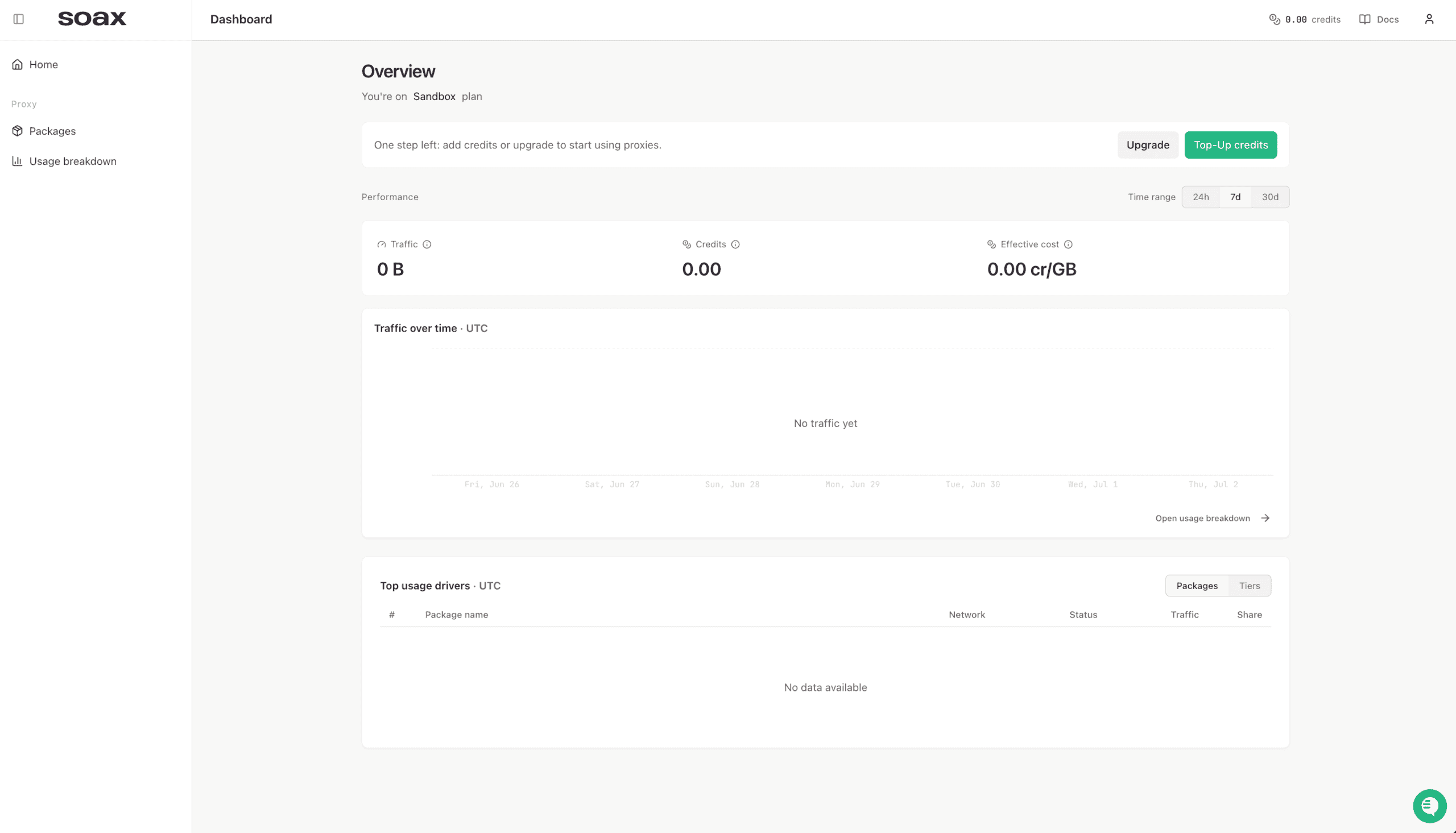
SOAX does have something resembling a dashboard wallet, but it’s not quite the same. Instead of storing money, it stores credits – the crucial distinction is that the credits expire, so you’ll have to constantly keep an eye on them.
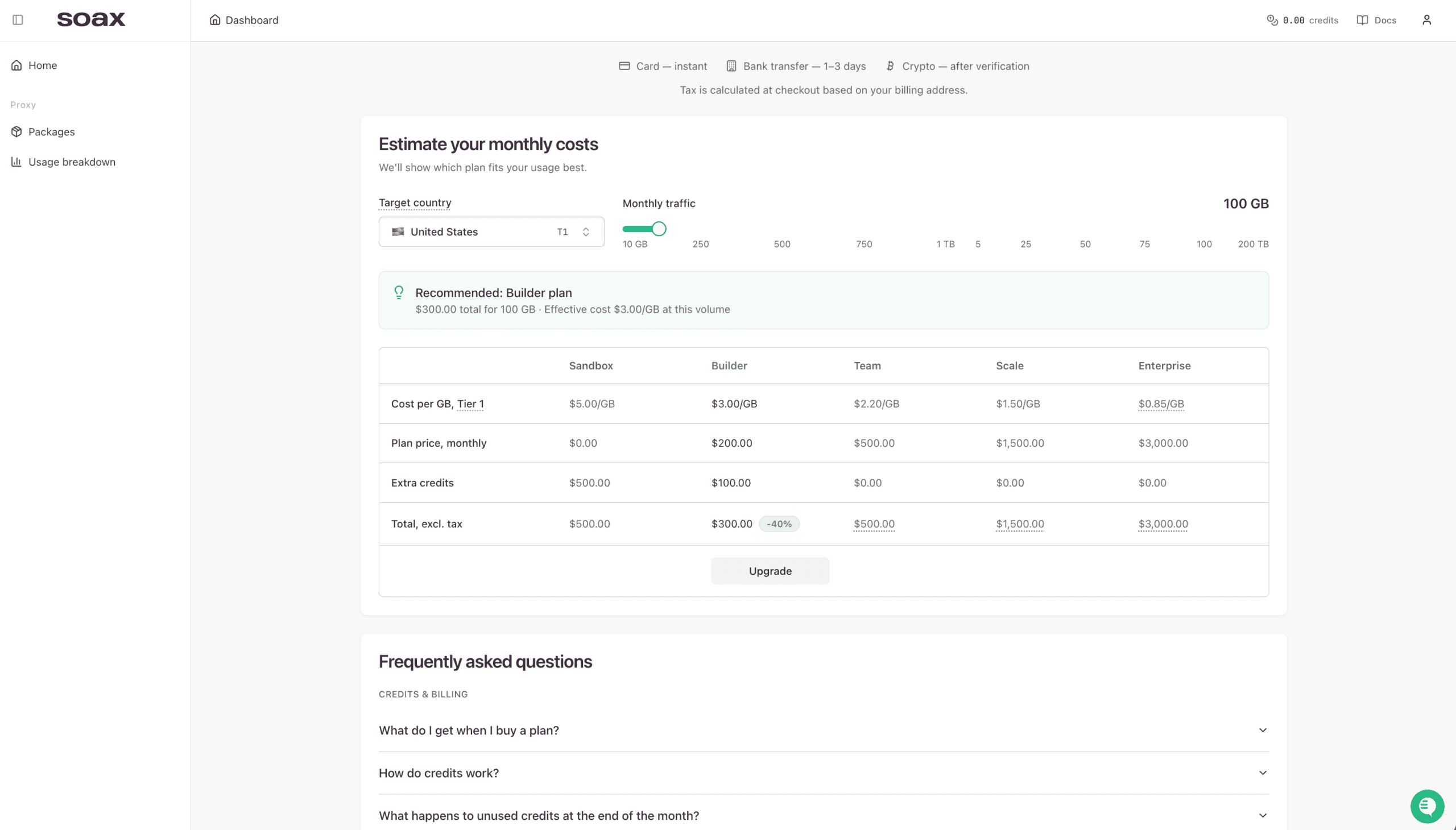
The page listing available pricing plans is very detailed and even includes a cost estimator to help you choose the best configuration. The problem here is that you can only select one country tier – if you’ll target several tiers or use the pool without filters, the math goes out the window.
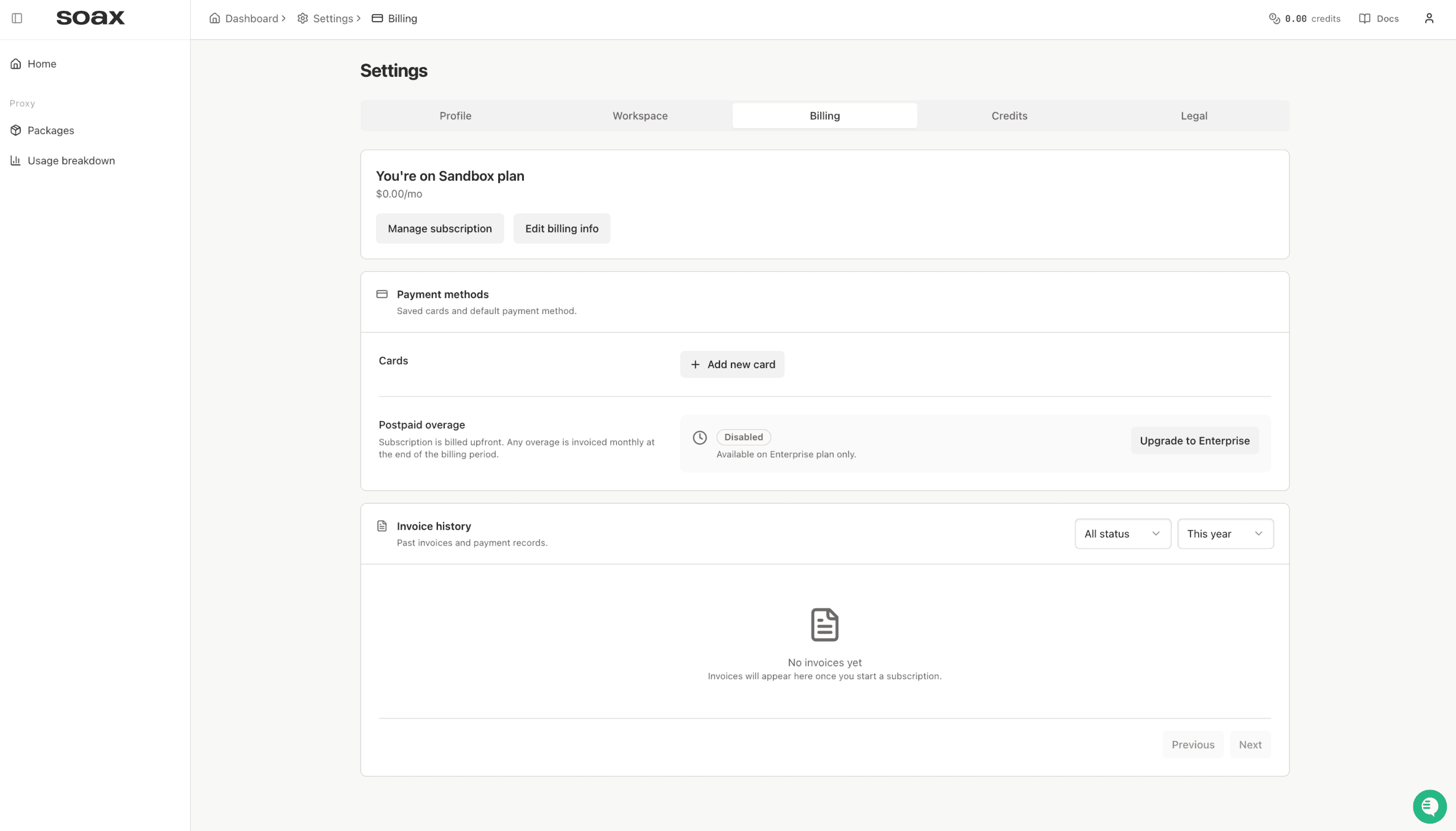
SOAX’s Billing page lets you save card details and billing information to streamline further purchases. It also stores all the invoices. You can track the state of your credits on a separate page accessible through the settings.
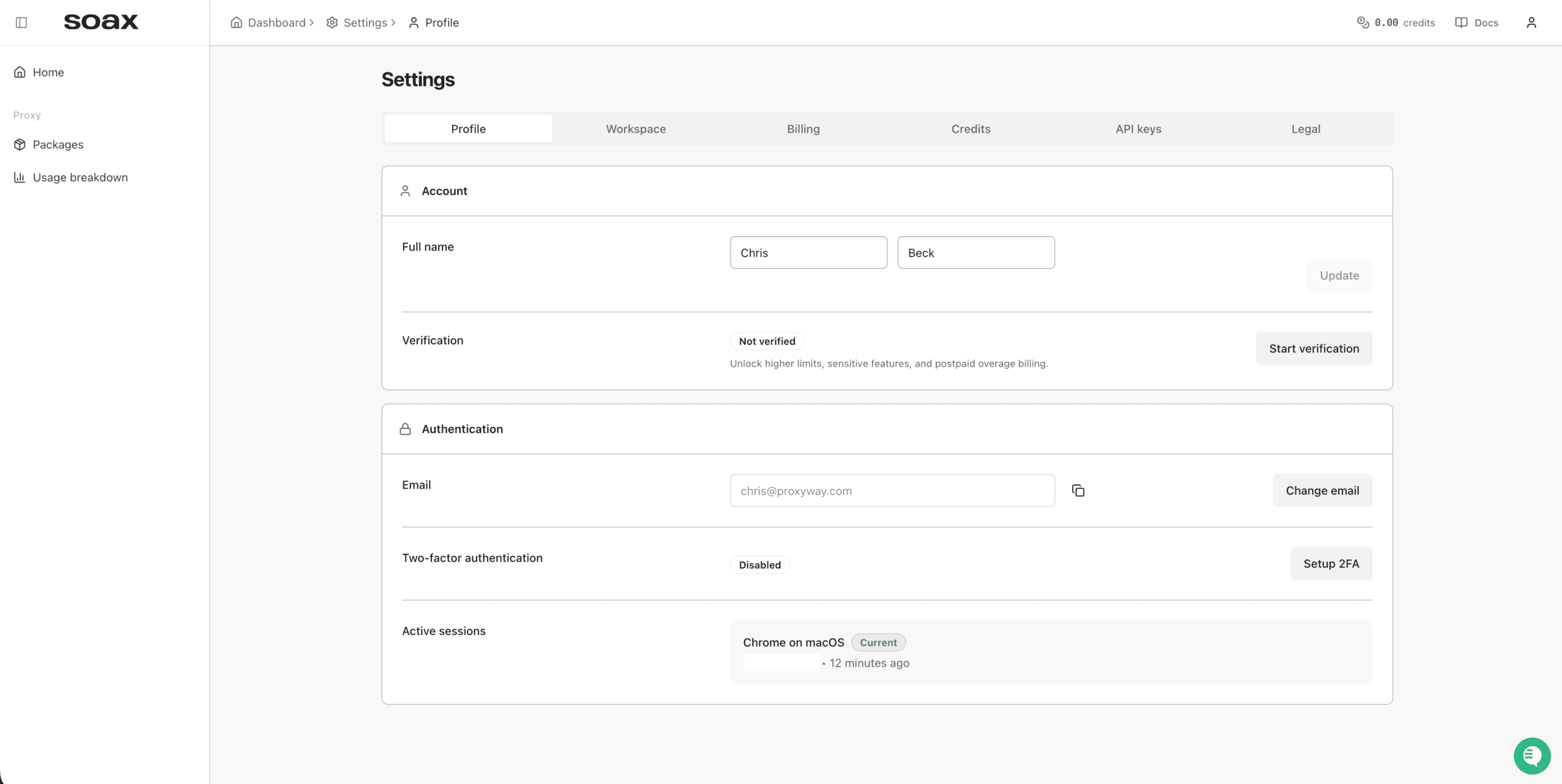
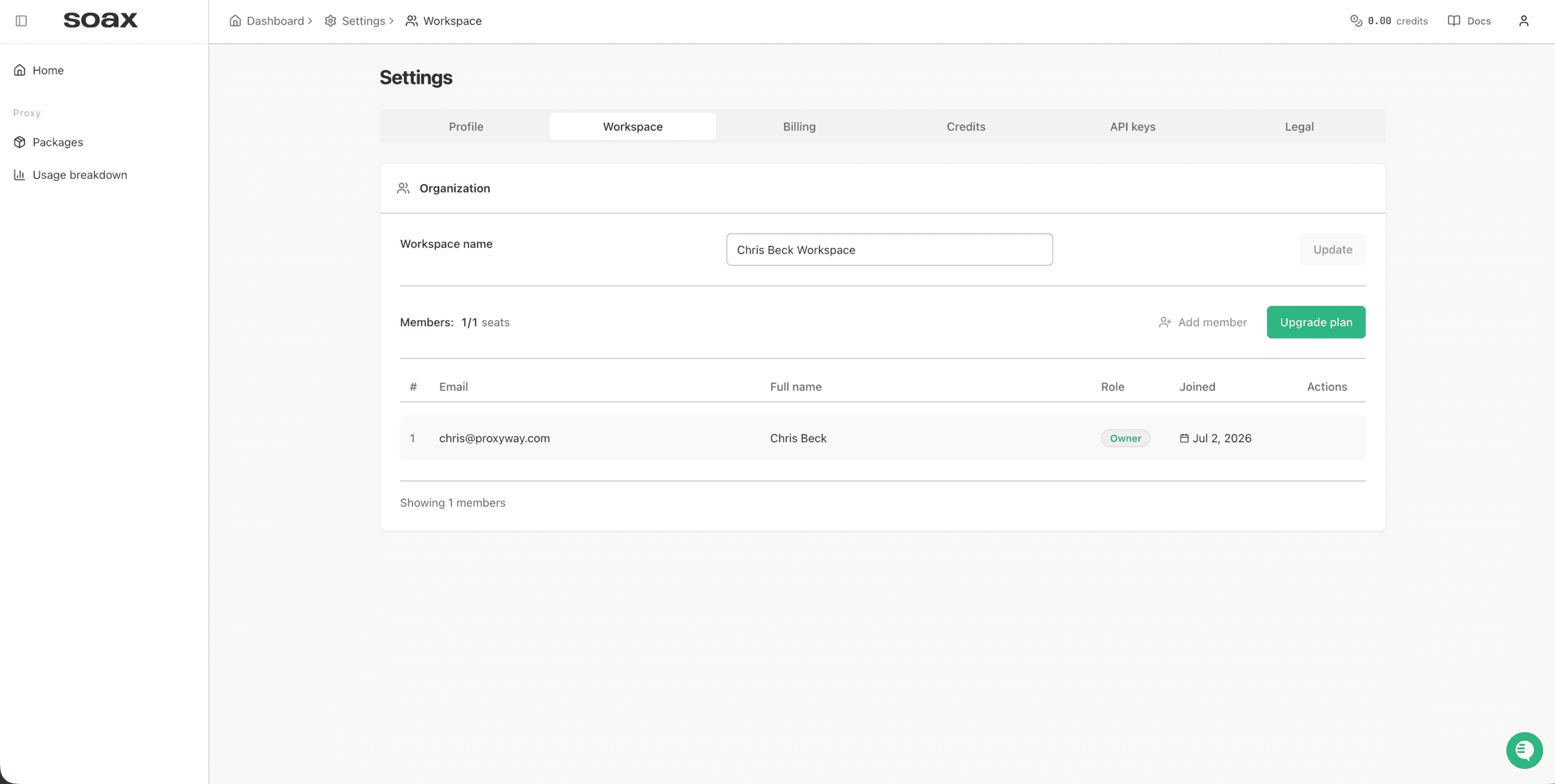
Proxy access
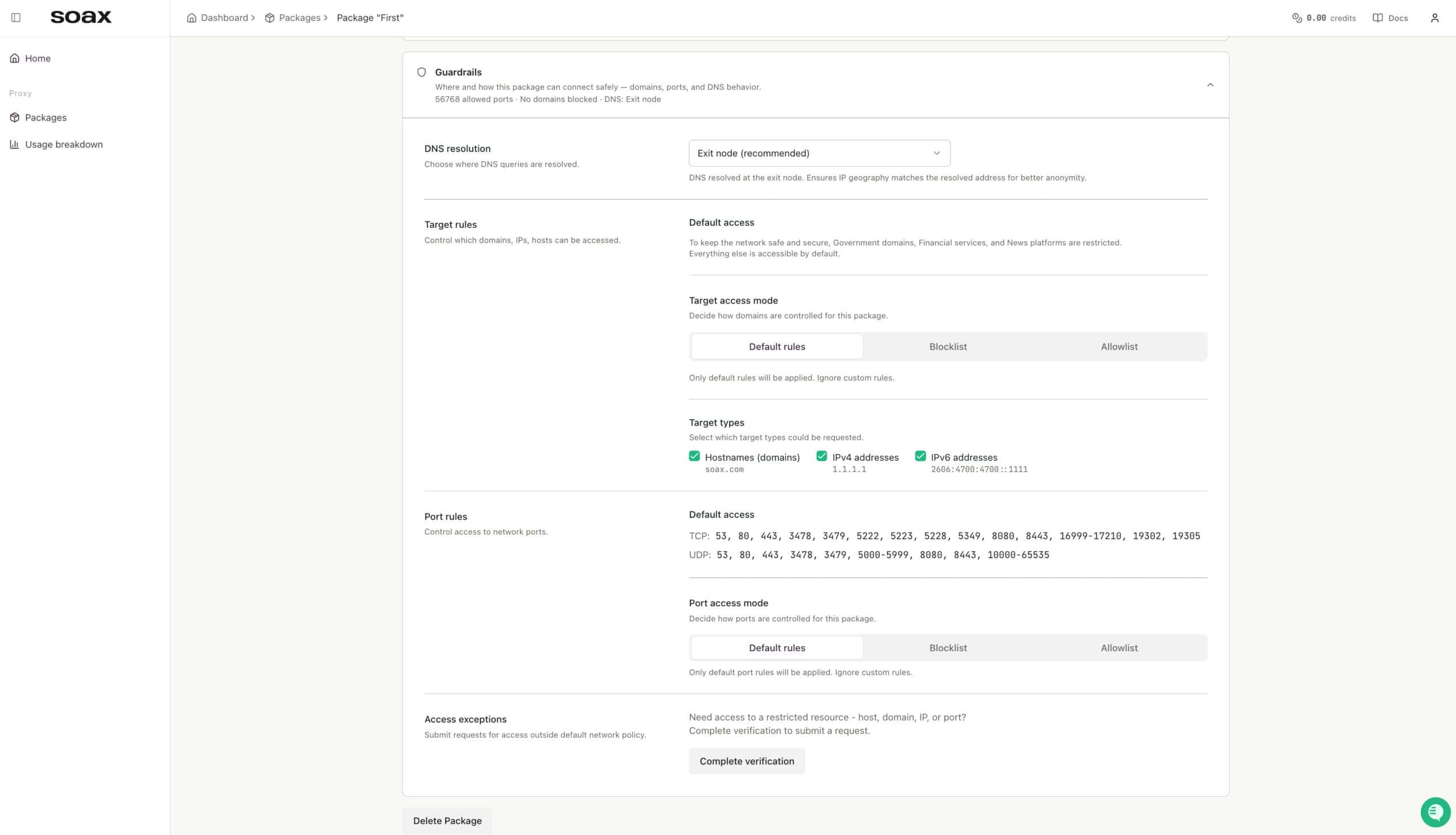
SOAX has built some fascinating proxy management tools. The main concept here is Packages. They’re similar to Bright Data’s zones, in that you can create and name several packages with the same or different proxy types, and each can have their own configuration.
SOAX exposes many configuration options that are not available with other providers. For example, you can choose which team members can use a package, then decided what protocols, ports, proxy networks, country tiers, individual countries, or domains that package can access. You can then go ahead and set up a traffic cap or leave it unlimited.
A package also holds the proxy setup widget. It’s comfortable to use and includes a built-in proxy checker. To keep up with the times, the code samples also provide instructions for AI tools.
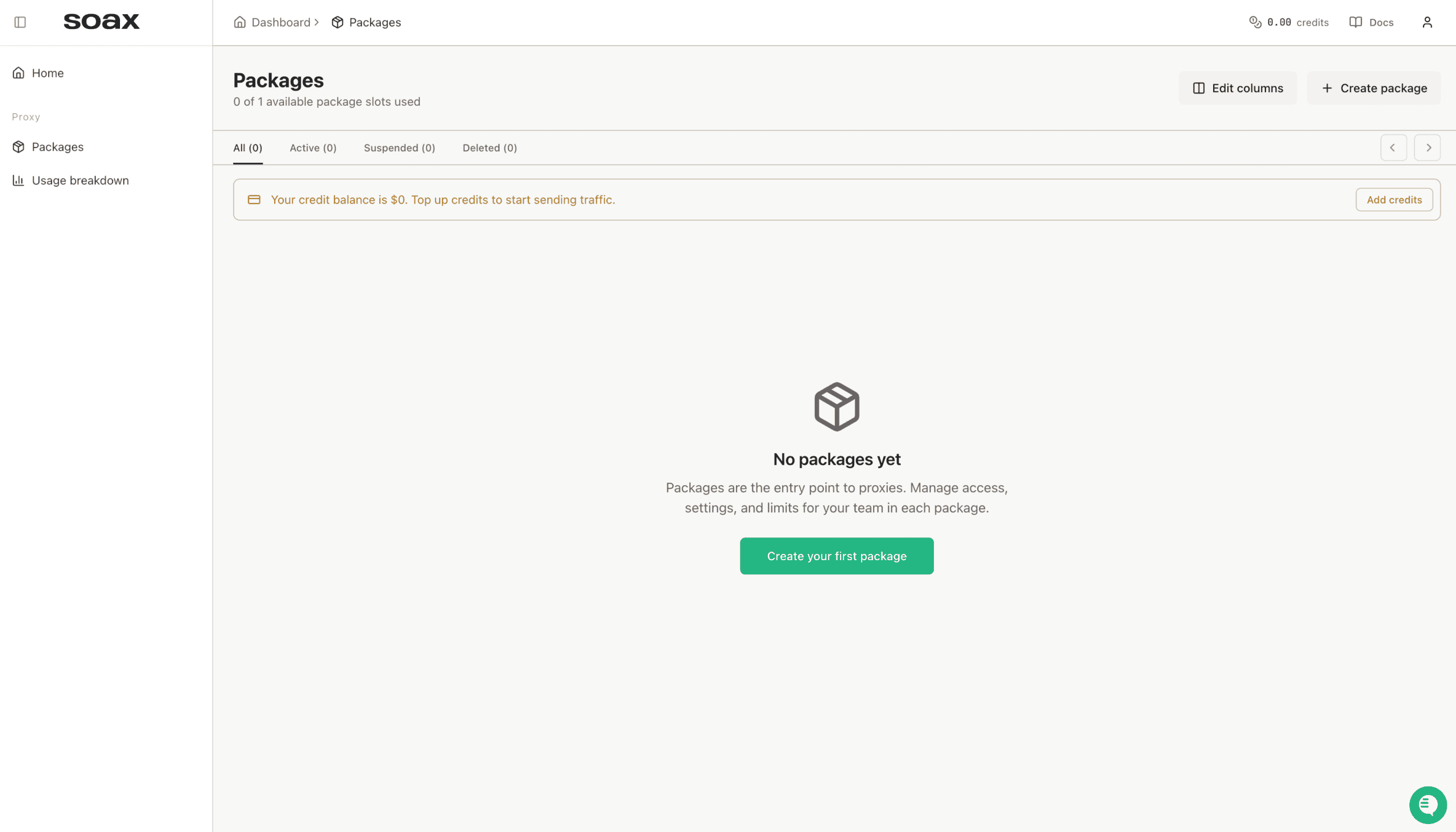
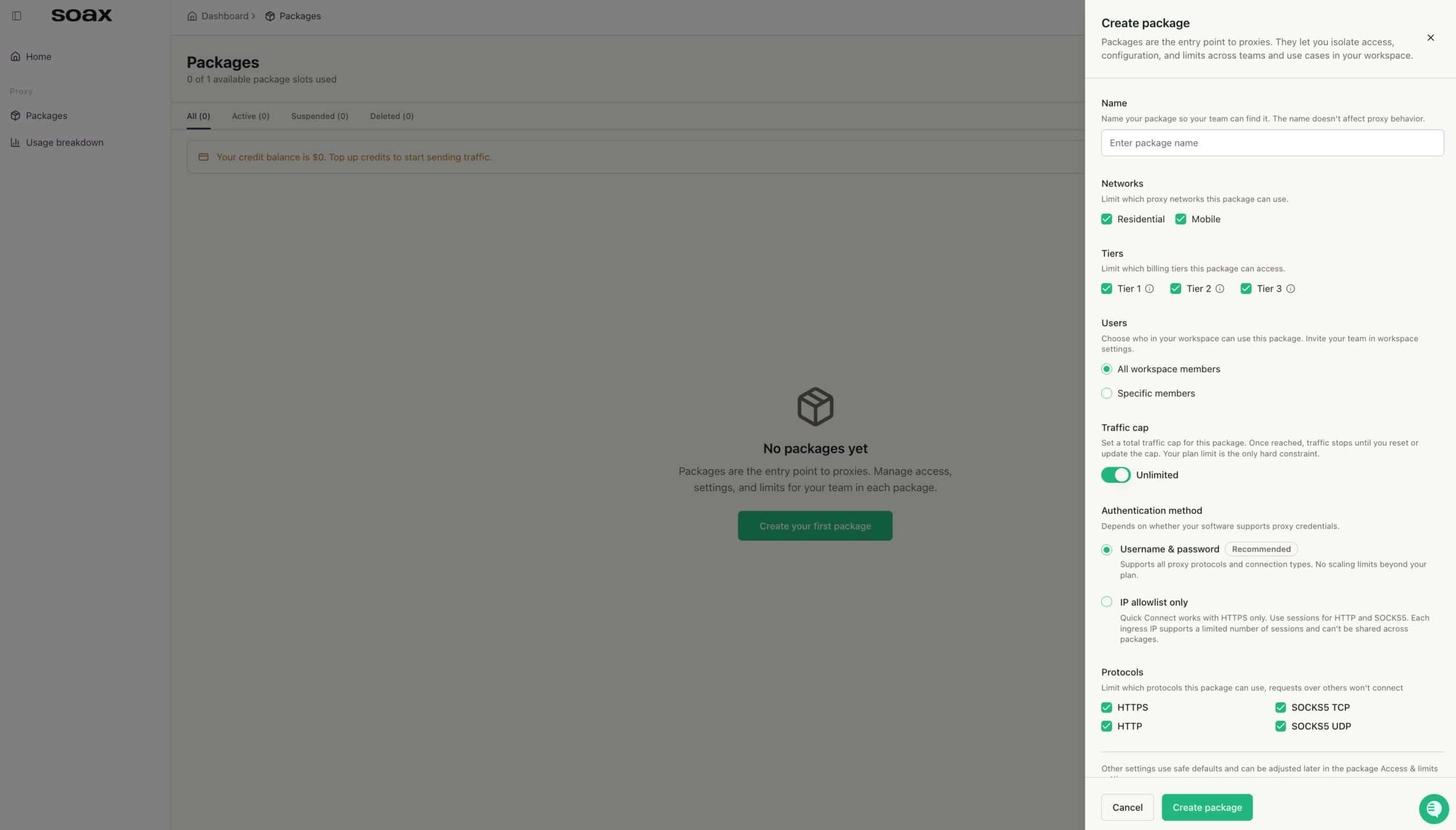
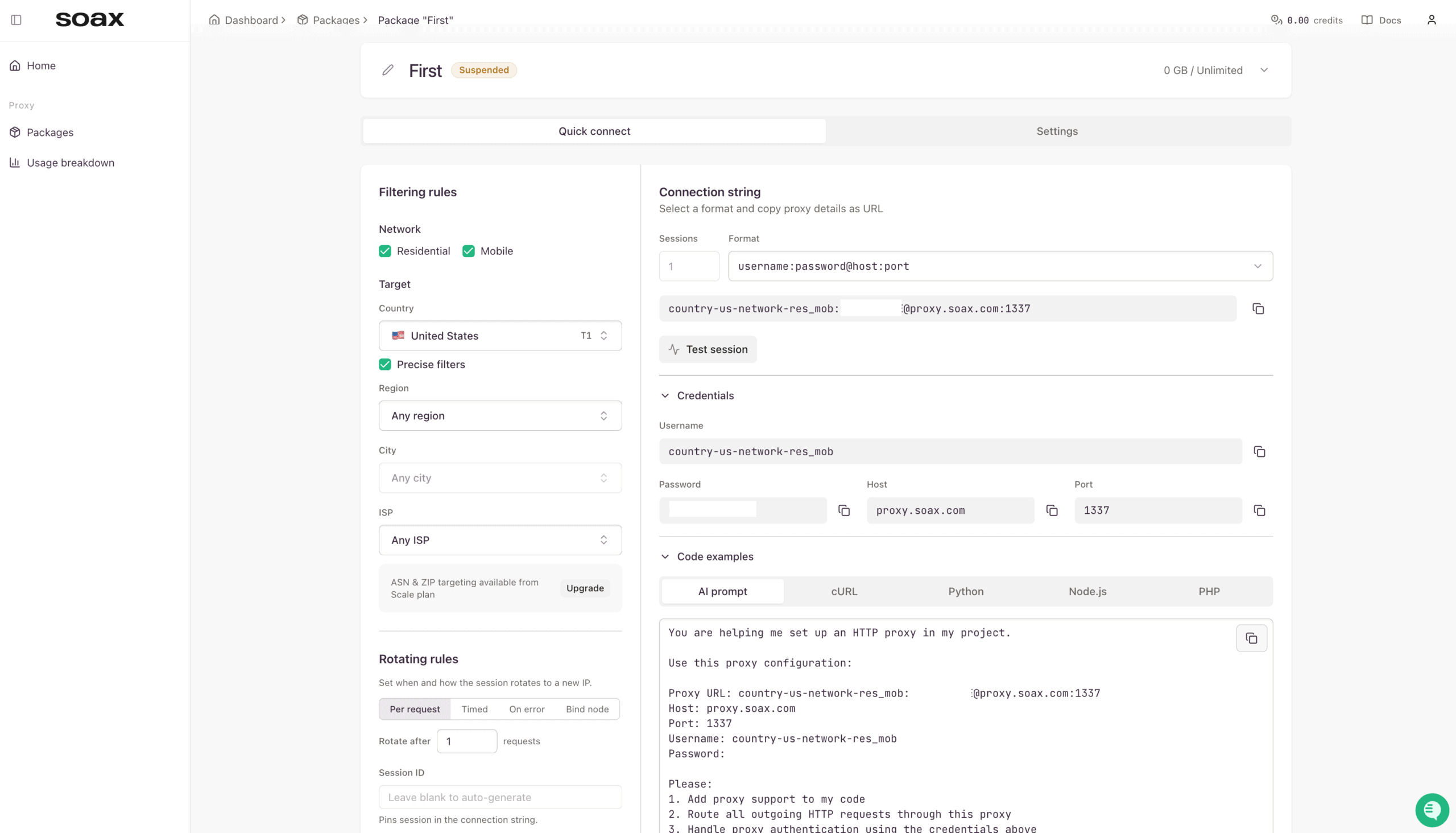
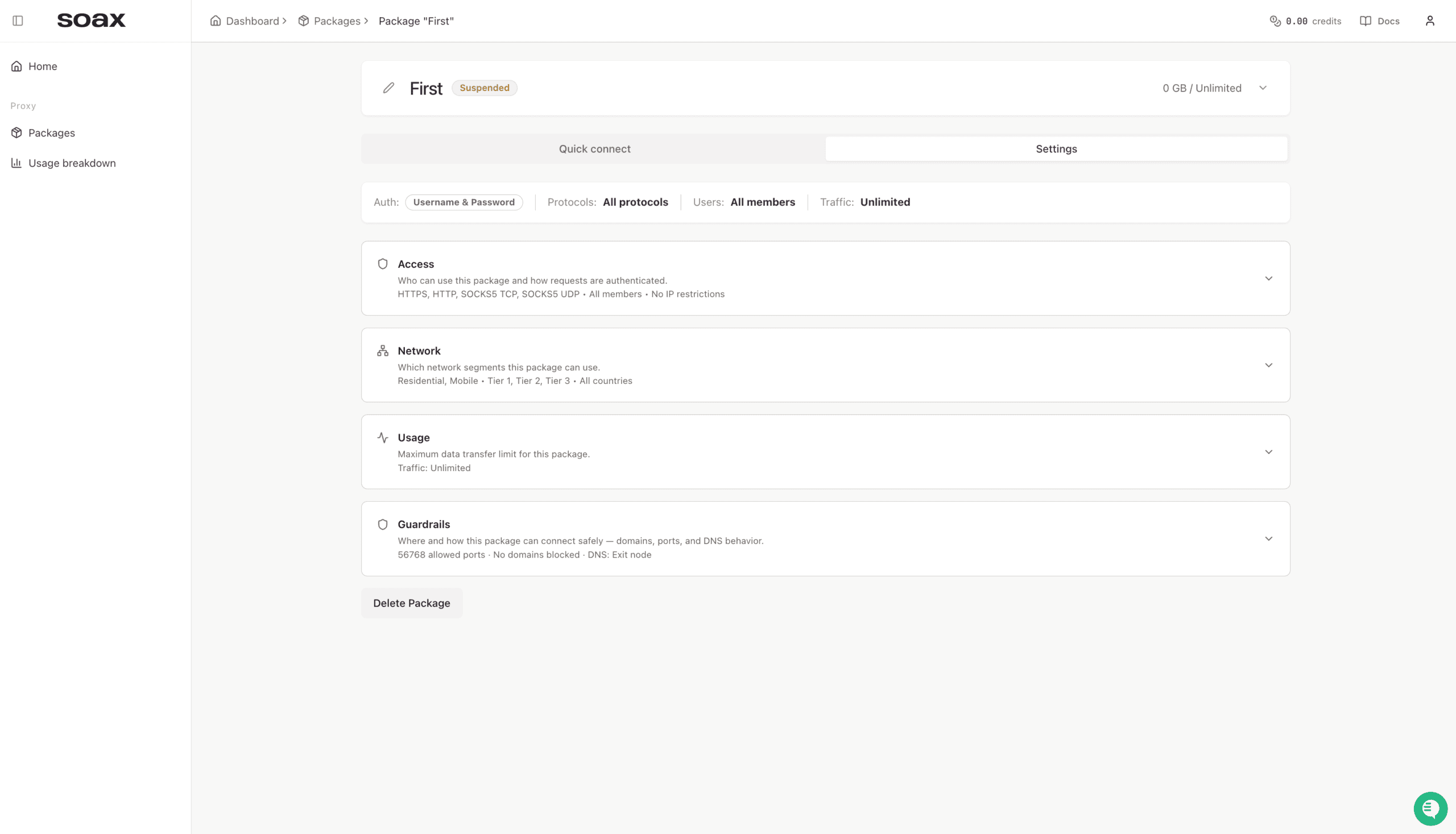
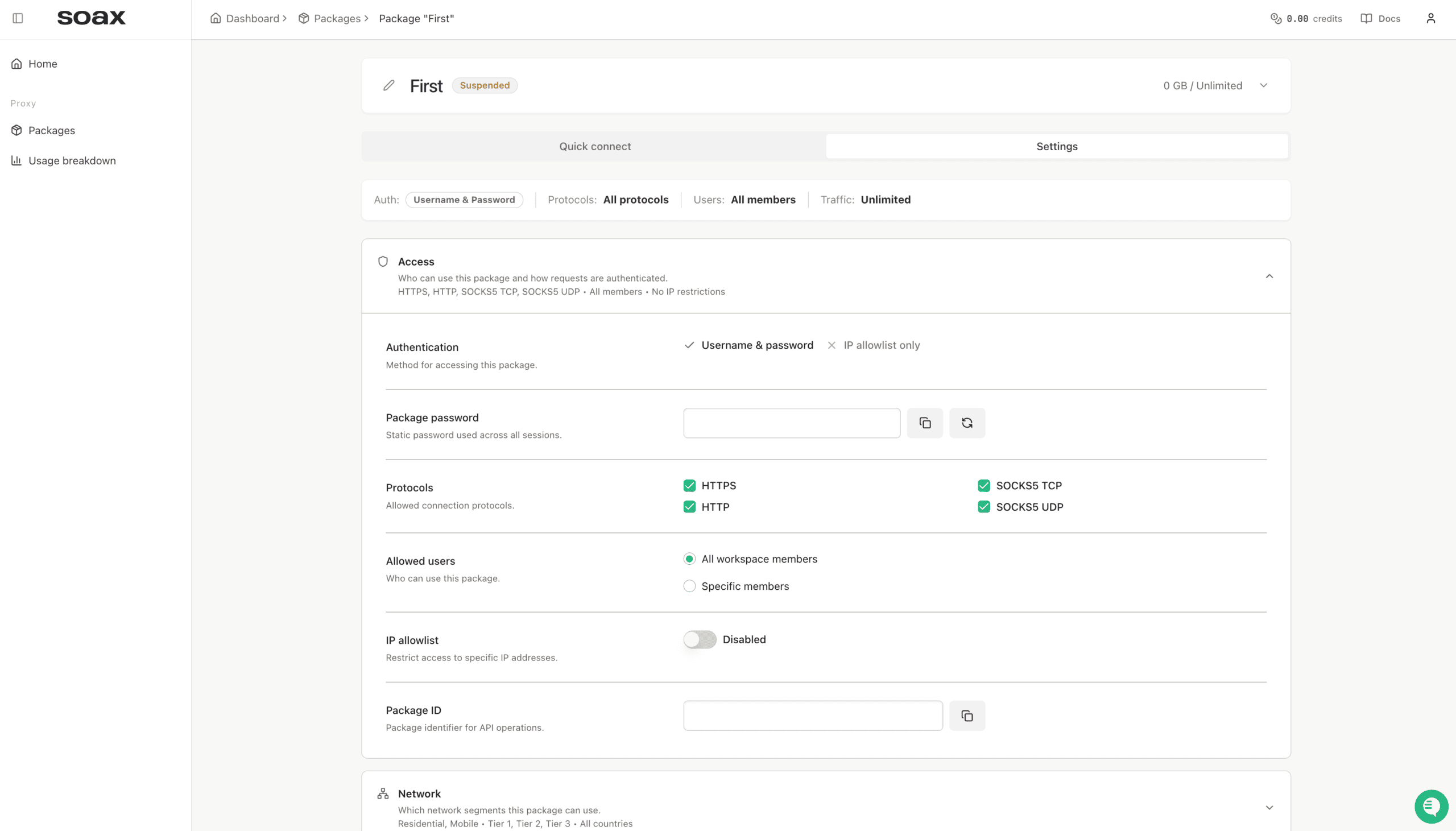
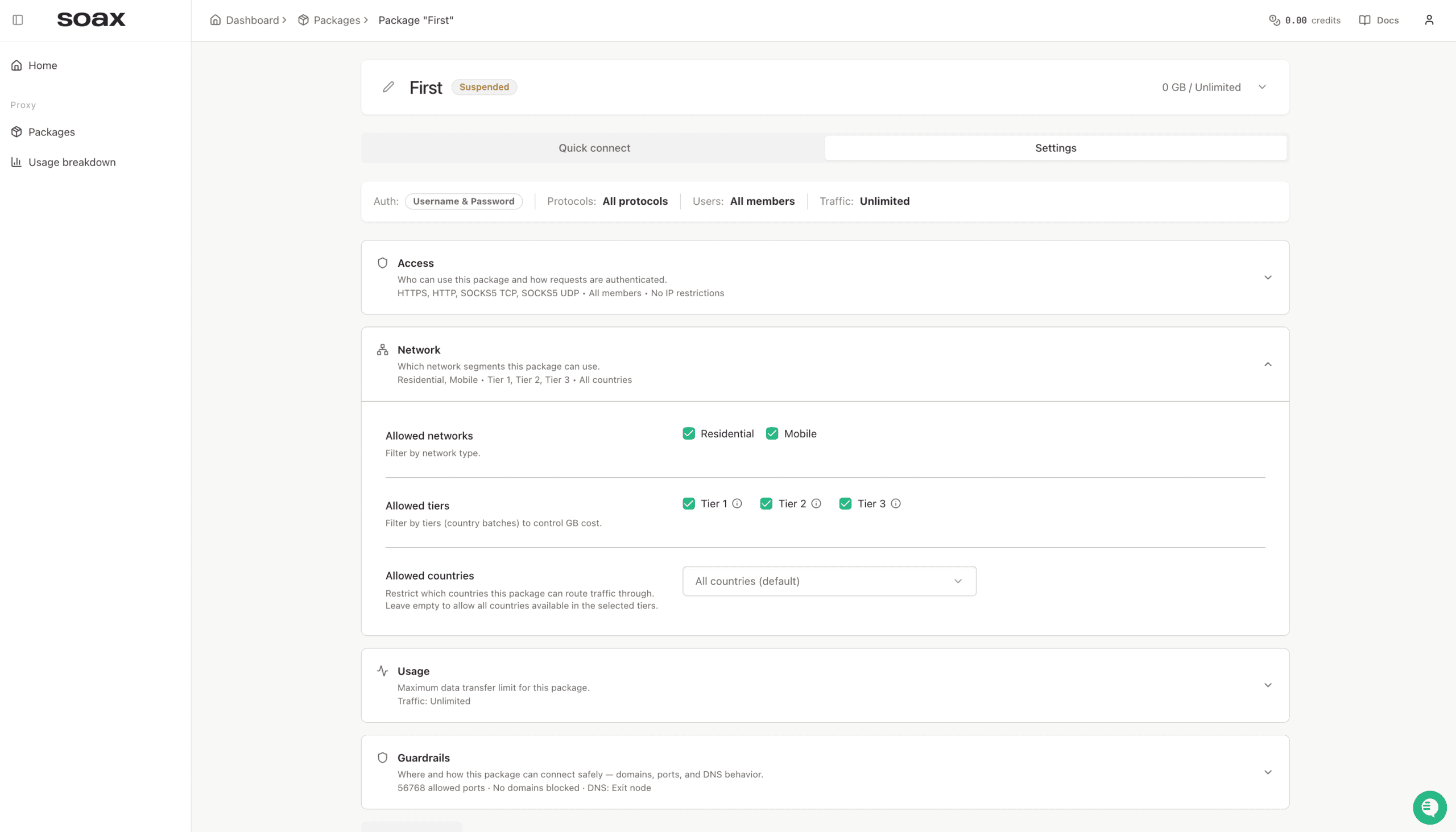
SOAX shows some usage information on the main screen, namely traffic and credit expenditure during the last 24 hours, seven, or 30 days.
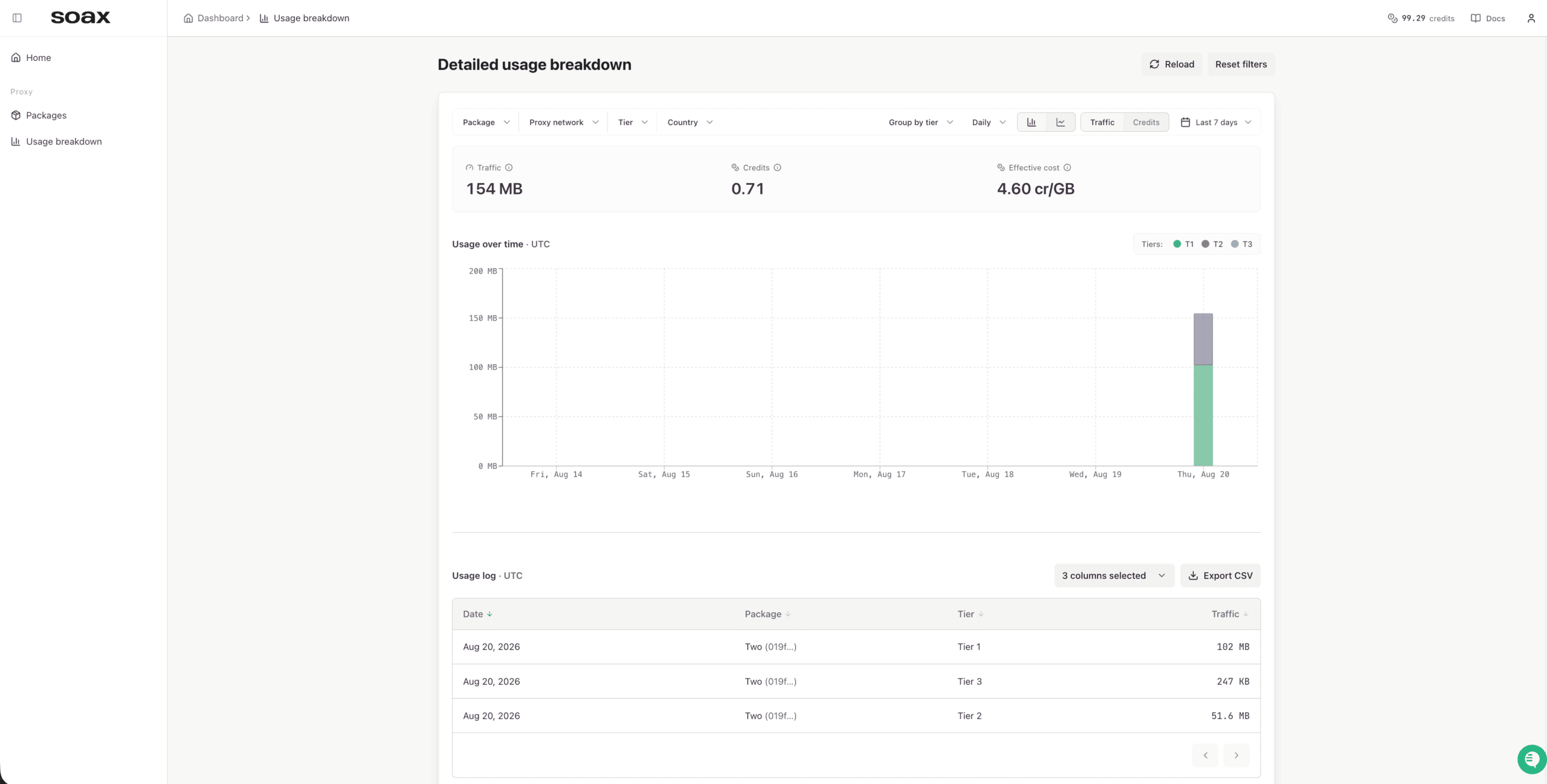
However, the main place for insights is the Usage breakdown page. It focuses on the same two metrics – traffic and cost – but is able to dissect them in many more ways. You can filter or group by package, proxy network, country tier, or specific location. This reflects in the usage graph.
The timeframes are also generous: SOAX includes pre-sets ranging anywhere from 24 hours to this year. What’s more, you can change the reporting granularity to an hour, day, or month. There’s even a refresh button which presumably updates the information to the given moment. All in all, the observability tools are much better than before.
Still, they’re not perfect. Some of our requests failed because they hit a denylisted news target. The usage stats don’t show success or latency data, so we had to discover this on our own. Neither can they categorize usage by domain.
API Access
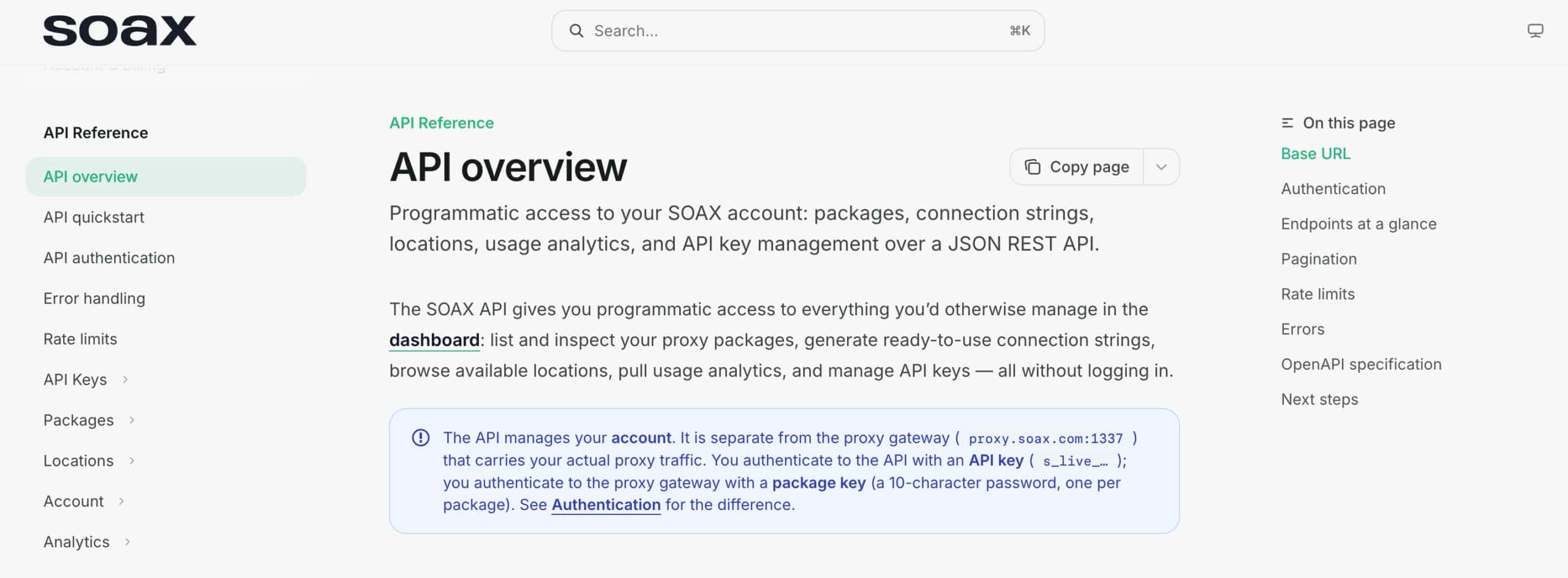
SOAX’s developer API lets you replicate most the of dashboard features. You’ll be able to fetch the account and package status, available locations, and usage information. There’s also an endpoint for generating proxy strings.
The main omission are subscription management features. The API won’t let you buy more credits or upgrade a plan.
Documentation
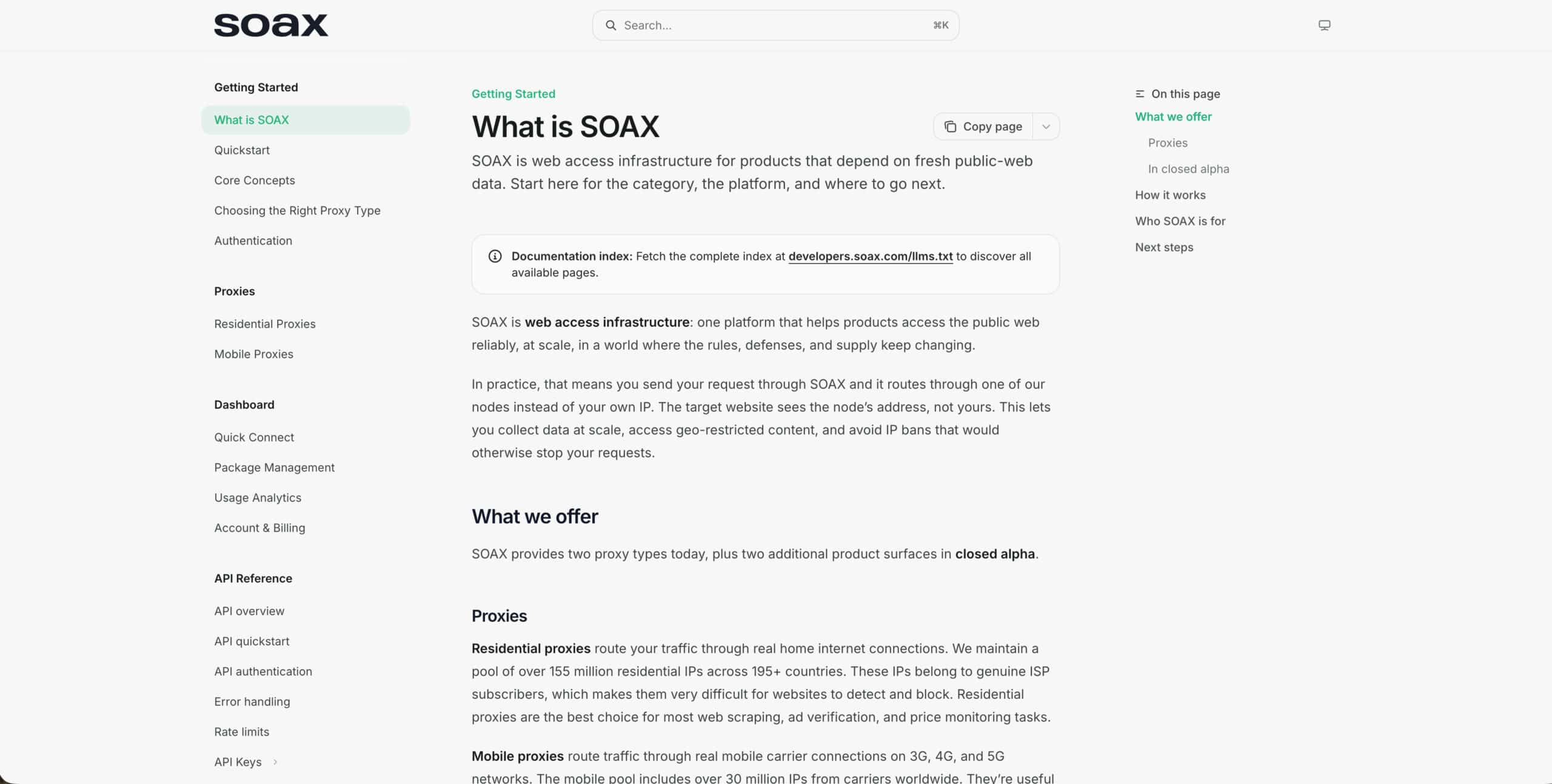
Your main reference will be SOAX’s documentation hub. It provides all the information you’ll need to work with the service: beginning with core concepts, continuing with proxy parameters, moving on to dashboard tools, and finishing with troubleshooting information.
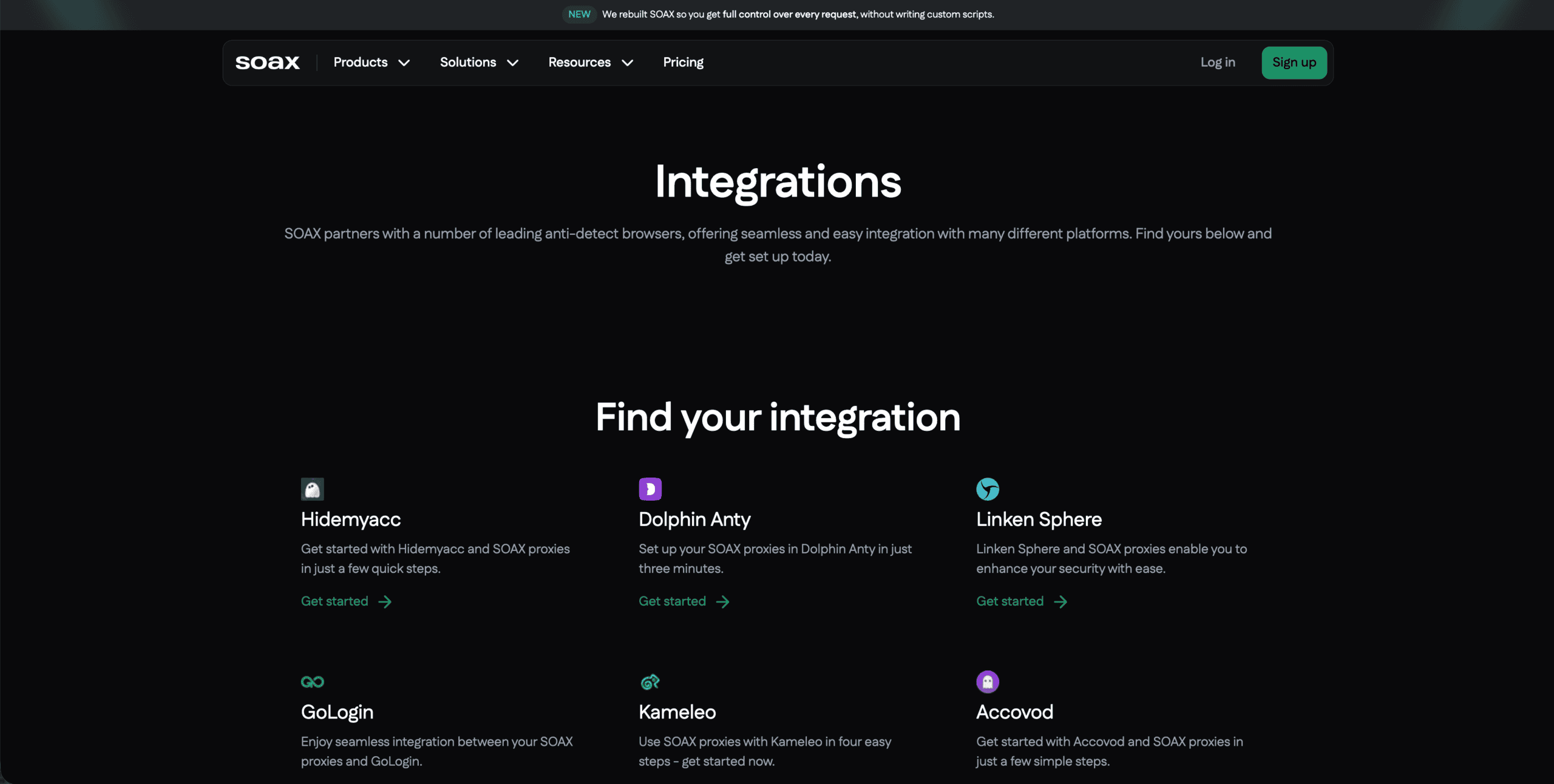
The documentation includes an FAQ, though it’s somewhat tucked away. There’s also a separate page for integration instructions. You won’t find much there other than antidetect browsers.
Hands-On Support
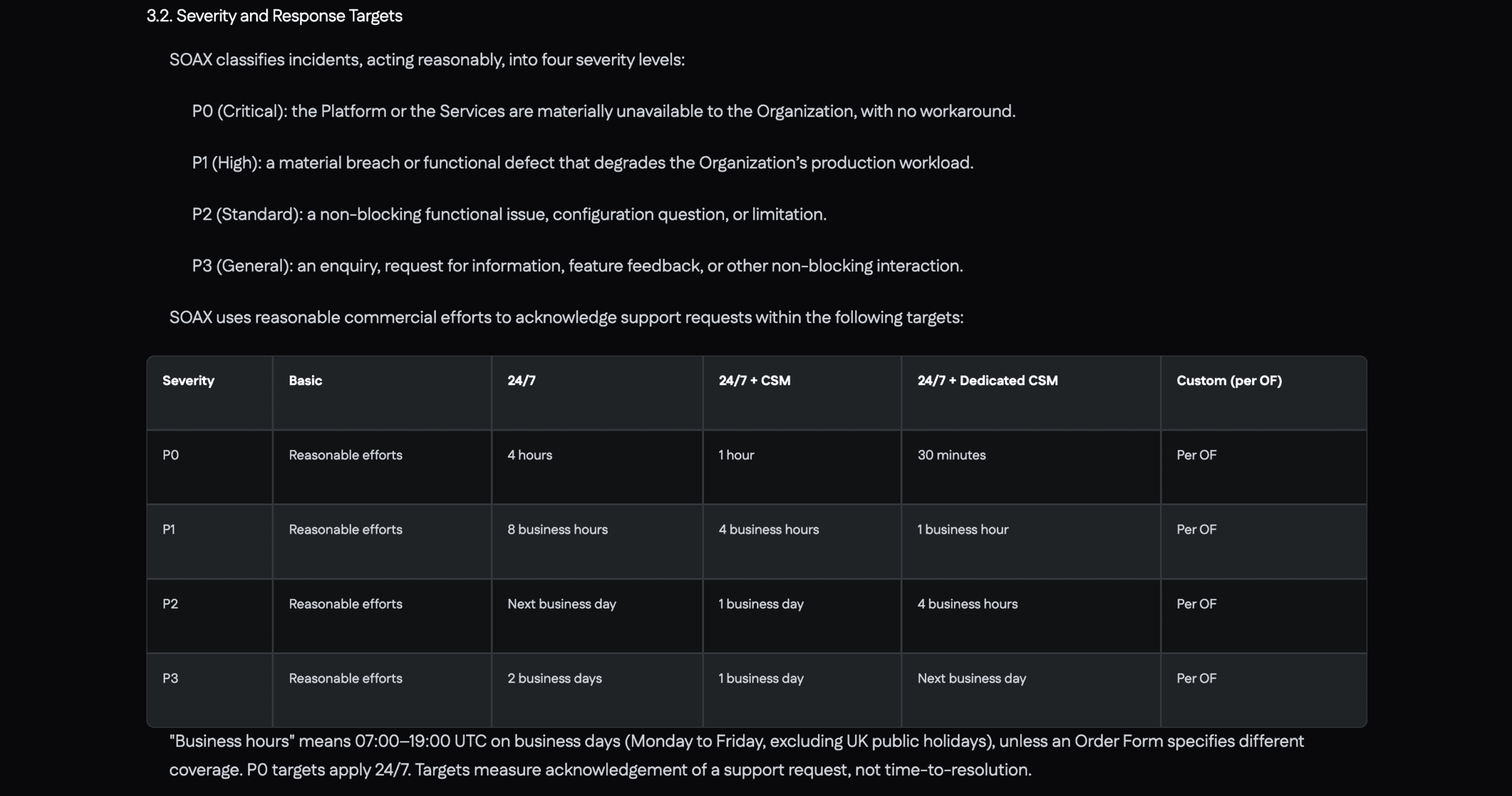
After its reboot in mid-2026, SOAX effectively nerfed the customer support experience. It’s no longer available 24/7 – the working hours fall between 07:00-19:00 UTC, Monday to Friday, excluding UK public holidays. Only critical incidents get round-the-clock attention.
The level of support depends on your subscription plan. The pay-as-you-go plan receives reasonable efforts to respond, whatever that means. The response targets for general inquiries or configuration questions are four business hours or more until enterprise levels of commitment.
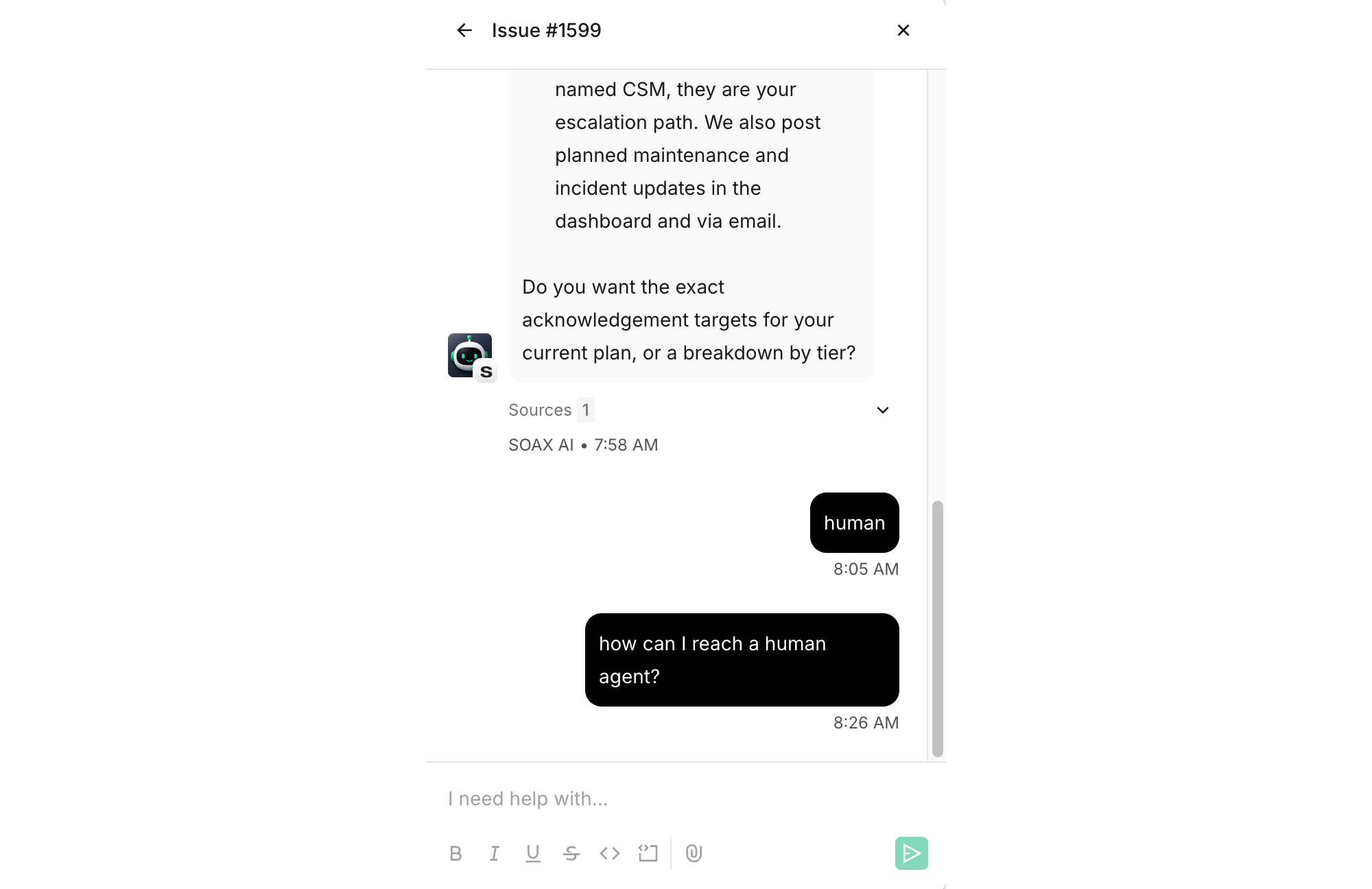
SOAX’s main support channels are live chat, tickets, and email. The live chat defaults to an AI chatbot. We tried reaching a real person during morning in Europe. Someone responded in an hour and a half, pasting a canned message that was unrelated to our question. Not the best first impression.
Conclusion
SOAX has positioned itself as a strong competitor to most mid-range services. It offers decently large and performant proxy networks with a unique developer experience. This comes at the cost of complexity and suboptimal customer support.
Overall, you may find SOAX especially attractive if you’re a developer or a control freak (in the best sense of the phrase).
SOAX Alternatives

Decodo is the first place to go if SOAX is not an option for you. It offers similar performance, great user experience, proxy-based tools and more features.

Oxylabs is like a premium version of SOAX. It controls a significantly larger IP pool, and you can get specialized APIs that simplify web scraping.

Bright Data is one of the biggest player in the premium space. It offers more features, some powerful proxy management tools, and complete pre-scraped data sets.
Recommended for:
Those who need full control over their residential proxy infrastructure.